


Page 36 - IJB-2-2
P. 36
Bioprinting in cardiovascular tissue engineering: a review


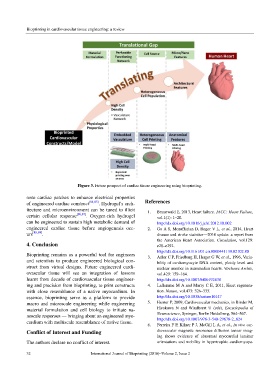
                                  Figure 3. Future prospect of cardiac tissue engineering using bioprinting.

            onto  cardiac patches  to  enhance electrical properties
            of engineered cardiac construct [84,85] . Hydrogel’s arch-  References
            itecture and microenvironment can be tuned to illicit   1.   Braunwald E, 2013, Heart failure. JACC: Heart Failure,
            certain cellular response [86,87] . Oxygen-rich hydrogel   vol.1(1): 1–20.
            can be engineered to sustain high metabolic demand of   http://dx.doi.org/10.1016/j.jchf.2012.10.002
            engineered  cardiac  tissue before angiogenesis occ-  2.   Go A S, Mozaffarian D, Roger V L, et al., 2014, Heart
            urs [88,89] .                                           disease and stroke statistics—2014 update: a report from
                                                                    the American  Heart Association.  Circulation,  vol.129:
            4. Conclusion                                           e28–e292.
                                                                    http://dx.doi.org/10.1161/01.cir.0000441139.02102.80
            Bioprinting remains as a powerful tool for engineers   3.   Adler C P, Friedburg H, Herget G W, et al., 1996, Varia-
            and scientists to  produce engineered  biological con-  bility of cardiomyocyte DNA content, ploidy level and
            struct from virtual designs. Future  engineered cardi-  nuclear number in mammalian hearts. Virchows Archiv,
            ovascular tissue will see  an integration of lessons    vol.429: 159–164.
            learnt from decade of cardiovascular tissue engineer-   http://dx.doi.org/10.1007/bf00192438
            ing and precision from bioprinting, to print constructs   4.   Laflamme M A and Murry C E, 2011, Heart regenera-
            with close  resemblance  of a  native myocardium.  In   tion. Nature, vol.473: 326–335.
            essence, bioprinting serve  as a platform to provide    http://dx.doi.org/10.1038/nature10147
            macro and microscale engineering while engineering   5.   Hunter P, 2009, Cardiovascular mechanics, in Binder M,
            material formulation and cell biology to initiate na-   Hirokawa N  and Windhorst U  (eds),  Encyclopedia  of
            noscale responses — bringing about an engineered myo-   Neuroscience, Springer, Berlin Heidelberg, 564–567.
                                                                    http://dx.doi.org/10.1007/978-3-540-29678-2_824
            cardium with multiscale resemblance of native tissue.
                                                                6.   Ferreira F P, Kilner P J, McGill L A, et al., In vivo car-
            Conflict of Interest and Funding                        diovascular magnetic resonance  diffusion tensor imag-
                                                                    ing shows evidence of abnormal myocardial  laminar
            The authors declare no conflict of interest.            orientations and mobility in hypertrophic cardiomyopa-

            32                          International Journal of Bioprinting (2016)–Volume 2, Issue 2

