


Page 459 - IJB-10-2
P. 459
International Journal of Bioprinting                       3D-printed bioceramic scaffolds for bone regeneration


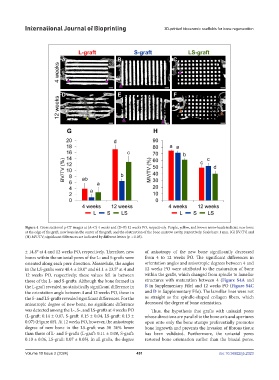
            Figure 4. Cross sectional µ-CT images at (A–C) 4 weeks and (D–F) 12 weeks PO, respectively. Purple, yellow, and brown arrowheads indicate new bone
            at the edge of the graft, new bone in the center of the graft, and the obstruction of the bone marrow cavity, respectively. Scale bars: 1 mm. (G) BV/TV, and
            (H) MV/TV; significant differences are indicated by different letters (p  < 0.05).


            ± 14.8° at 4 and 12 weeks PO, respectively. Therefore, new   of anisotropy of the new bone significantly decreased
            bones within the uniaxial pores of the L- and S-grafts were   from 4 to 12 weeks PO. The significant differences in
            oriented along each pore direction. Meanwhile, the angles   orientation angles and anisotropic degrees between 4 and
            in the LS-grafts were 48.4 ± 29.0° and 61.1 ± 23.5° at 4 and   12  weeks  PO  were  attributed  to  the  maturation  of  bone
            12 weeks PO, respectively; these values fell in between   within the grafts, which changed from spindle to lamellar
            those of the L- and S-grafts. Although the bone formed in   structures with maturation between 4 (Figure S4A  and
            the L-graft revealed no statistically significant difference in   B in Supplementary File) and 12 weeks PO (Figure S4C
            the orientation angle between 4 and 12 weeks PO, those in   and D in Supplementary File). The lamellar lines were not
            the S- and LS-grafts revealed significant differences. For the   as straight as the spindle-shaped collagen fibers, which
            anisotropic degree of new bone, no significant difference   decreased the degree of bone orientation.
            was detected among the L-, S-, and LS-grafts at 4 weeks PO   Thus,  the  hypothesis  that  grafts  with  uniaxial  pores
            (L-graft: 0.14 ± 0.07, S-graft: 0.15 ± 0.04, LS-graft: 0.13 ±   whose directions are parallel to the bone axis and apertures
            0.07) (Figure 6F). At 12 weeks PO, however, the anisotropic   open onto only the bone stumps preferentially promotes
            degree of new bone in the LS-graft was 30–36% lower   bone ingrowth and prevents the invasion of fibrous tissue
            than those of L- and S-grafts (L-graft: 0.11 ± 0.08, S-graft:   has been validated. Furthermore, the uniaxial pores
            0.10 ± 0.06, LS-graft: 0.07 ± 0.05). In all grafts, the degree   restored  bone  orientation  earlier  than  the  biaxial  pores.


            Volume 10 Issue 2 (2024)                       451                                doi: 10.36922/ijb.2323

