


Page 53 - IJB-3-2
P. 53
Pujiang Shi, et. al.


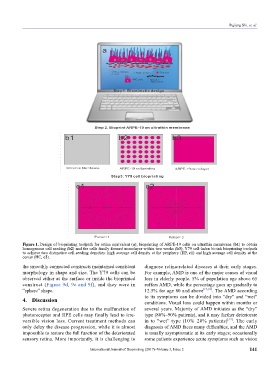
           Figure 1. Design of bioprinting toolpath for retina equivalent (a); bioprinting of ARPE-19 cells on ultrathin membrane (b1) to obtain
           homogenous cell seeding (b2) and the cells finally formed monolayer within two weeks (b3); Y79 cell-laden bioink bioprinting toolpath
           to achieve two distinctive cell-seeding densities: high average cell density at the periphery (HP, c1) and high average cell density at the
           center (HC, c2).
           the smoothly connected constructs maintained consistent   diagnose retina-related diseases at their early stages.
           morphology in shape and size. The Y79 cells can be   For example, AMD is one of the major causes of visual
           observed either at the surface or inside the bioprinted   loss in elderly people. 5% of population age above 65
           construct (Figure 9d, 9e and 9f), and they were in   suffers AMD, while the percentage goes up gradually to
           “sphere” shape.                                     12.5% for age 80 and above [17,18] . The AMD according

           4.  Discussion                                      to its symptoms can be divided into “dry” and “wet”
                                                               conditions. Visual loss could happen within months or
           Severe retina degeneration due to the malfunction of   several years. Majority of AMD initiates as the “dry”
           photoreceptor and RPE cells may finally lead to irre-  type (80%–90% patients), and it may further deteriorate
           versible vision loss. Current treatment methods can   in to “wet” type (10%–20% patients) [19] . The early
           only delay the disease progression, while it is almost   diagnosis of AMD faces many difficulties, and the AMD
           impossible to restore the full function of the deteriorated   is usually asymptomatic at its early stages; occasionally
           sensory retina. More importantly, it is challenging to   some patients experience acute symptoms such as vision

                                       International Journal of Bioprinting (2017)–Volume 3, Issue 2       141

