


Page 152 - IJB-10-3
P. 152
International Journal of Bioprinting                                           3D bone: Current & future


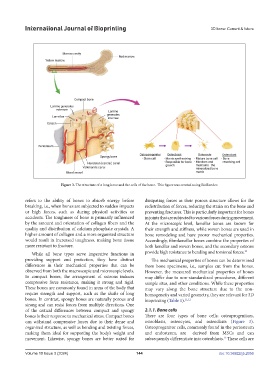
                           Figure 3. The structure of a long bone and the cells of the bone.  This figure was created using BioRender.


            refers to the ability of bones to absorb energy before   dissipating forces as their porous structure allows for the
            breaking, i.e., when bones are subjected to sudden impacts   redistribution of forces, reducing the strain on the bone and
            or high forces, such as during physical activities or   preventing fractures. This is particularly important for bones
            accidents. The toughness of bone is primarily influenced   in joints that are subjected to various forces during movement.
            by the amount and orientation of collagen fibers and the   At the microscopic level, lamellar bones are known for
            quality and distribution of calcium phosphate crystals. A   their strength and stiffness, while woven bones are used in
            higher amount of collagen and a more organized structure   bone remodeling and have poorer mechanical properties.
            would result in increased toughness, making bone tissue   Accordingly, fibrolamellar bones combine the properties of
            more resistant to fracture.                        both lamellar and woven bones, and the secondary osteons

               While all bone types serve imperative functions in   provide high resistance to bending and torsional forces. 10
            providing support and protection, they have distinct   The mechanical properties of bones can be determined
            differences in their mechanical properties that can be   from bone specimens, i.e., samples cut from the bones.
            observed from both the macroscopic and microscopic levels.   However, the measured mechanical properties of bones
            In compact bones, the arrangement of osteons induces   may differ due to non-standardized procedures, different
            compressive force resistance, making it strong and rigid.   sample sites, and other conditions. While these properties
            These bones are commonly found in areas of the body that   may  vary  along  the  bone  structure  due  to  the  non-
            require strength and support, such as the shafts of long   homogeneity and varied geometry, they are relevant for 3D
            bones. In contrast, spongy bones are naturally porous and   bioprinting (Table 1). 11,12
            strong and can resist forces from multiple directions. One
            of the critical differences between compact and spongy   2.1.1. Bone cells
            bones is their response to mechanical stress. Compact bones   There are four types of bone cells: osteoprogenitors,
            can withstand compressive forces due to their dense and   osteoblasts,  osteocytes,  and  osteoclasts  (Figure  3).
            organized structure, as well as bending and twisting forces,   Osteoprogenitor cells, commonly found in the periosteum
            making them ideal for supporting the body’s weight and   and endosteum, are  derived from MSCs and can
            movement. Likewise, spongy bones are better suited for   subsequently differentiate into osteoblasts.  These cells are
                                                                                                13

            Volume 10 Issue 3 (2024)                       144                                doi: 10.36922/ijb.2056

