


Page 155 - IJB-10-3
P. 155
International Journal of Bioprinting                                           3D bone: Current & future


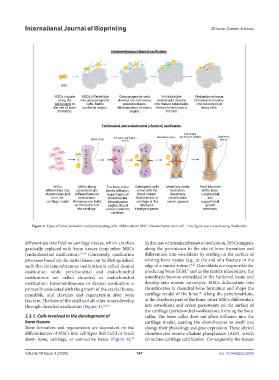
               Figure 4. Types of bone formation and participating cells. Abbreviation: MSC: Mesenchymal stem cell.  This figure was created using BioRender.


            differentiate into hyaline cartilage tissues, which are then   In the case of intramembranous ossification, MSCs migrate
            gradually replaced with bone tissues from other MSCs   along the periosteum to the site of bone formation and
            (endochondral ossification). 19,20  Conversely, ossification   differentiate into osteoblasts by settling on the surface of
            processes based on the initial tissue can be distinguished,   existing bone tissues (e.g., at the end of a fracture or the
                                                                                   8,21
            such that intramembranous ossification is called desmal   edge of a cranial suture).  Osteoblasts are responsible for
            ossification while perichondrial  and  endochondral   producing bone ECM,  and as the matrix mineralizes, the
                                                                                 9
            ossifications are called chondral or endochondral   osteoblasts become embedded in the hardened tissue and
            ossification.  Intramembranous  or  desmal  ossification  is   develop  into  mature osteocytes.  MSCs  differentiate  into
            primarily associated with the growth of the cranial bones,   chondrocytes in chondral bone formation and shape the
                                                                                      20
            mandible, and clavicles and regeneration after bone   cartilage model of the bone.  Along the perichondrium,
            fracture. The base of the skull and all other bones develop   at the diaphysis part of the bone, other MSCs differentiate
            through chondral ossification (Figure 4). 8,9,19   into osteoblasts and create periosteum on the surface of
                                                               the cartilage (perichondral ossification), forming the bone
            2.3.1. Cells involved in the development of        collar. The bone collar does not allow diffusion into the
            bone tissues                                       cartilage  model,  causing  the  chondrocytes  to  swell  and
            Bone formation and regeneration are dependent on the   change their physiology and gene expression. These altered
            differentiation of MSCs into cell types that build or break   chondrocytes secrete alkaline phosphatase (ALP), which
            down bone, cartilage, or connective tissue (Figure 4).     stimulates cartilage calcification. Consequently, the tissues
                                                         20

            Volume 10 Issue 3 (2024)                       147                                doi: 10.36922/ijb.2056

