


Page 614 - IJB-10-3
P. 614
International Journal of Bioprinting                       Wireless module system applied on 3D-printed implant


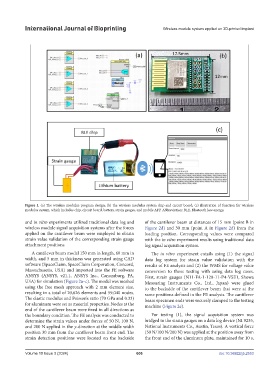
            Figure 1. (a) The wireless modulus program design; (b) the wireless modulus system chip and circuit board; (c) illustration of function for wireless
            modulus system, which includes chip, circuit board, battery, strain gauges, and mobile APP. Abbreviation: BLE, Bluetooth low energy.

            and in vitro experiments utilized traditional data log and   of the cantilever beam at distances of 15 mm (point B in
            wireless module signal acquisition systems after the forces   Figure 2d) and 30 mm (point A in Figure 2d) from the
            applied on the cantilever beam were employed to obtain   loading  position.  Corresponding  values  were  compared
            strain value validation of the corresponding strain gauge   with the in vitro experiment results using traditional data
            attachment positions.                              log signal acquisition system.
               A cantilever beam model 150 mm in length, 60 mm in   The  in vitro  experiment entails using (1) the signal
            width, and 5 mm in thickness was generated using CAD   data log system for strain value validation with the
            software (SpaceClaim, SpaceClaim Corporation, Concord,   results of FE analysis and (2) the WMS for voltage value
            Massachusetts, USA) and imported into the FE software   conversion to those testing with using data log cases.
            ANSYS (ANSYS, v21.1, ANSYS Inc., Canonsburg, PA,   First, strain gauges (N11-FA-1-120-11-P4-VSE1, Showa
            USA) for simulation (Figure 2a–c). The model was meshed   Measuring Instruments Co., Ltd., Japan) were glued
            using the free mesh approach with 2 mm element size,   to the backside of the cantilever beam that were at the
            resulting in a total of 20,626 elements and 59,040 nodes.   same positions defined in the FE analysis. The cantilever
            The elastic modulus and Poisson’s ratio (70 GPa and 0.33)   beam specimen ends were securely clamped to the testing
            for aluminum were set as material properties. Nodes at the   machine (Figure 2e).
            end of the cantilever beam were fixed in all directions as
            the boundary condition. The FE analysis was conducted to   For testing (1), the signal acquisition system was
            determine the strain values under forces of 50 N, 100 N,   bridged to the strain gauges on a data log device (NI 9235,
            and 200 N applied in the y-direction at the middle width   National Instruments Co., Austin, Texas). A vertical force
            position 30 mm from the cantilever beam front end. The   (50 N/100 N/200 N) was applied at the position away from
            strain detection positions were located on the backside   the front end of the aluminum plate, maintained for 10 s,


            Volume 10 Issue 3 (2024)                       606                                doi: 10.36922/ijb.2553

