


Page 340 - IJB-10-6
P. 340
International Journal of Bioprinting                           3D-printed PPDO/GO stents for CHD treatment.


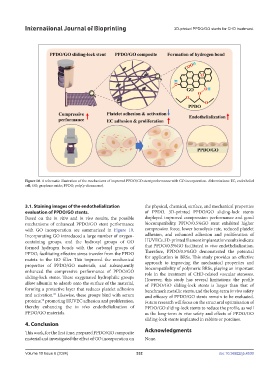
            Figure 10. A schematic illustration of the mechanisms of improved PPDO/GO stent performance with GO incorporation. Abbreviations: EC, endothelial
            cell; GO, graphene oxide; PPDO, poly(p-dioxanone).


            3.1. Staining images of the endothelialization     the physical, chemical, surface, and mechanical properties
            evaluation of PPDO/GO stents.                      of PPDO. 3D-printed PPDO/GO sliding-lock stents
            Based on the  in vitro and  in vivo results, the possible   displayed improved compression performance and good
            mechanisms of enhanced PPDO/GO stent performance   biocompatibility.  PPDO/0.5%GO stent exhibited  higher
            with  GO  incorporation  are  summarized  in  Figure  10.   compression force, lower hemolysis rate, reduced platelet
            Incorporating GO introduced a large number of oxygen-  adhesion, and enhanced adhesion and proliferation of
            containing groups, and the hydroxyl groups of GO   HUVECs. 3D-printed filament implantation results indicate
            formed  hydrogen  bonds  with  the  carbonyl  groups  of   that PPDO/0.5%GO facilitated in vivo endothelialization.
            PPDO, facilitating effective stress transfer from the PPDO   Therefore, PPDO/0.5%GO demonstrated the potential
            matrix to the GO filler. This improved the mechanical   for application in BRSs. This study provides an effective
            properties of PPDO/GO materials, and subsequently   approach to improving the mechanical properties and
            enhanced  the  compressive  performance  of  PPDO/GO   biocompatibility of polymeric BRSs, playing an important
                                                               role in the treatment of CHD-related vascular stenoses.
            sliding-lock stents. These oxygenated hydrophilic groups   However, this study has  several limitations: the  profile
            allow albumin to adsorb onto the surface of the material,   of PPDO/GO sliding-lock stents is larger than that of
            forming a protective layer that reduces platelet adhesion   benchmark metallic stents, and the long-term in vivo safety
            and activation.  Likewise, these groups bind with serum   and efficacy of PPDO/GO stents remain to be evaluated.
                        95
            proteins,  promoting HUVEC adhesion and proliferation,   Future research will focus on the structural optimization of
                   98
            thereby enhancing the  in vivo endothelialization of   PPDO/GO sliding-lock stents to reduce the profile, as well
            PPDO/GO materials.                                 as the long-term in vivo safety and effects of PPDO/GO
                                                               sliding-lock stents implanted in rabbits or porcines.
            4. Conclusion
                                                               Acknowledgments
            This work, for the first time, prepared PPDO/GO composite
            material and investigated the effect of GO incorporation on   None.


            Volume 10 Issue 6 (2024)                       332                                doi: 10.36922/ijb.4530

