


Page 38 - IJB-7-1
P. 38
3D Printing Technologies in Metallic Implants


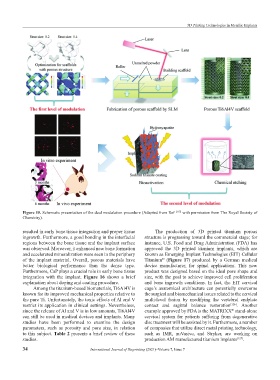
           Figure 15. Schematic presentation of the dual modulation procedure (Adapted from Ref  [117]  with permission from The Royal Society of
           Chemistry).


           resulted in early bone tissue integration and proper tissue   The production of 3D printed titanium porous
           ingrowth. Furthermore, a good bonding in the interfacial   structure is progressing toward the commercial stage; for
           regions between the bone tissue and the implant surface   instance, U.S. Food and Drug Administration (FDA) has
           was observed. Moreover, it enhanced new bone formation   approved the 3D printed titanium implants, which are
           and accelerated mineralization were seen in the periphery   known as Emerging Implant Technologies (EIT) Cellular
           of the implant material. Overall, porous materials have   Titanium  (Figure  17)  produced  by  a  German  medical
                                                                      ®
           better  biological  performance  than  the  dense  type.   device  manufacturer,  for  spinal  applications.  This  new
           Furthermore, CaP plays a crucial role in early bone tissue   product was designed based on the ideal pore shape and
           integration  with  the  implant.  Figure 16  shows  a  brief   size, with the goal to achieve improved cell proliferation
           explanation about doping and coating procedure.     and  bone  ingrowth  conditions.  In  fact,  the  EIT  cervical
               Among the titanium-based biomaterials, Ti6Al4V is   cage’s  anatomical  architecture  can  potentially  overcome
           known for its improved mechanical properties relative to   the surgical and biomechanical issues related to the cervical
           the pure Ti. Unfortunately, the toxic effects of Al and V   multi-level  fusion  by  modifying  the  vertebral  endplate
           restrict its application in clinical settings. Nevertheless,   contact  and  sagittal  balance  restoration [126] .  Another
           since the release of Al and V is in low amounts, Ti6Al4V   example approved by FDA is the MATRIXX  stand-alone
                                                                                                    ®
           can still be used in medical devices and implants. Many   cervical  system  for  patients  suffering  from  degenerative
           studies  have  been  performed  to  examine  the  design   disc treatment will be assisted by it. Furthermore, a number
           parameters,  such  as  porosity  and  pore  size,  in  relation   of companies that utilize direct metal printing technology,
           to this subject. Table 2 presents a brief review of these   such  as  IMR,  nuVasive,  and  Stryker,  are  working  on
           studies.                                            production AM manufactured titanium implants [127] .

           34                          International Journal of Bioprinting (2021)–Volume 7, Issue 7

