


Page 39 - IJB-7-1
P. 39
Attarilar, et al.


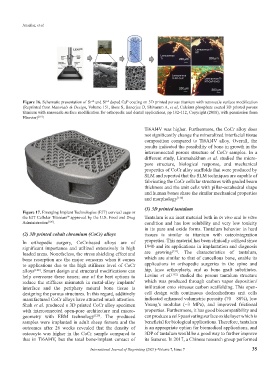
           Figure 16. Schematic presentation of Sr  and Si  doped CaP coating on 3D printed porous titanium with nanoscale surface modification
                                              +4
                                        +2
           (Reprinted from Materials & Design, Volume 151, Bose S, Banerjee D, Shivaram A, et al, Calcium phosphate coated 3D printed porous
           titanium with nanoscale surface modification for orthopedic and dental applications, pp 102-112, Copyright (2018), with permission from
           Elsevier) [119] .
                                                               Ti6Al4V was higher. Furthermore, the CoCr alloy does
                                                               not significantly change the mineralized interfacial tissue
                                                               composition  compared  to  Ti6Al4V  alloy.  Overall,  the
                                                               results indicated the possibility of bone in growth in the
                                                               interconnected  porous  structure  of  CoCr  samples.  In  a
                                                               different study, Limmahakhun et al. studied the micro-
                                                               pore  structure,  biological  response,  and  mechanical
                                                               properties of CoCr alloy scaffolds that were produced by
                                                               SLM and reported that the SLM techniques are capable of
                                                               fabricating the CoCr cellular structures with graded beam
                                                               thickness and the unit cells with pillar-octahedral shape
                                                               and human bones share the similar mechanical properties
                                                               and morphology [130] .
                                                               (3) 3D printed tantalum
           Figure 17. Emerging Implant Technologies (EIT) cervical cage or
           the EIT Cellular Titanium  approved by the U.S. Food and Drug   Tantalum is an inert material both in in vivo and in vitro
                              ®
           Administration [126] .                              condition and has low solubility and very low toxicity
                                                               in its pure and oxide forms. Tantalum behavior in hard
           (2) 3D printed cobalt chromium (CoCr) alloys        tissues  is similar  to  titanium  with  osteointegration

           In  orthopedic  surgery,  CoCr-based  alloys  are  of   properties. This material has been clinically utilized since
           significant  importance  and  utilized  extensively  in  high   1940 and its applications in implantation and diagnosis
           loaded areas. Nonetheless, the stress shielding effect and   are  growing [131] .  The  characteristics  of  tantalum,
           bone  resorption  are  the  major  concerns  when  it  comes   which are similar to that of cancellous bone, enable its
           to  applications  due  to  the  high  stiffness  level  of  CoCr   applications  in  orthopedic  surgeries  in  the  spine and
           alloys [128] . Smart design and structural modifications can   hip,  knee  arthroplasty,  and  as  bone  graft  substitutes.
           help overcome these issues;  one  of  the best  options  to   Levine  et al. [132]  studied the porous tantalum  structure
           reduce  the  stiffness  mismatch  in  metal-alloy  implants’   which  was  produced  through  carbon  vapor  deposition/
           interface  and  the  periphery  natural  bone  tissue  is   infiltration onto vitreous carbon scaffolding. This open-
           designing the porous structures. In this regard, additively   cell  design  with  continuous  dodecahedrons  unit  cells
           manufactured CoCr alloys have attracted much attention.   indicated enhanced volumetric porosity (70 – 80%), low
           Shah et al. produced a 3D printed CoCr alloy specimen   Young’s  modulus  (~3  MPa),  and  improved  frictional
           with  interconnected  open-pore  architecture  and  macro-  properties. Furthermore, it has good biocompatibility and
           geometry  with  EBM  technology [129] .  The  produced   can produce a self-passivating surface oxide layer which is
           samples were implanted in adult sheep femora and the   beneficial for biological applications. Therefore, tantalum
           outcomes  after  26  weeks  revealed  that  the  density  of   is an appropriate option for biomedical applications, and
           osteocyte  was  higher  in  the  CoCr  sample  compared  to   3DP of tantalum would be a good way to further improve
           that  in  Ti6Al4V,  but  the  total  bone-implant  contact  of   its features. In 2017, a Chinese research group performed

                                       International Journal of Bioprinting (2021)–Volume 7, Issue 7        35

