


Page 139 - IJB-8-2
P. 139
Li, et al.
                        A                               B


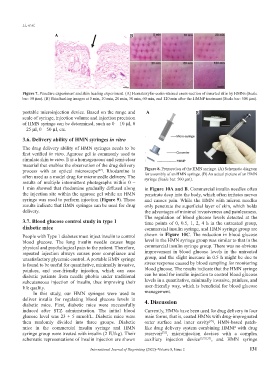
           Figure 7. Puncture experiment and skin healing experiment. (A) Hematoxylin-eosin-stained cross-section of inserted skin by HMNs (Scale
           bar: 50 μm). (B) Skin healing images at 0 min, 10 min, 20 min, 30 min, 60 min, and 120 min after the HMNP treatment (Scale bar: 500 μm).


           portable microinjection device. Based on the range and   A               B
           scale of syringe, injection volume and injection precision
           of HMN syringe can be determined, such as 0 – 10 μl, 0
           – 25 μl, 0 – 50 μl, etc.

           3.6. Delivery ability of HMN syringes in vitro
           The drug delivery ability of HMN syringes needs to be
           first verified in vitro. Agarose gel is commonly used to
           simulate skin in vitro. It is a homogeneous and semi-clear
           material that enables the observation of the drug delivery
           process with an optical  microscope . Rhodamine  is   Figure 8. Preparation of the HMN syringe. (A) Schematic diagram
                                           [27]
                                                              for assembly of an HMN syringe. (B) An actual picture of an HMN
           often used as a model drug for microneedle delivery. The   syringe (Scale bar: 500 μm).
           results of multiple intermittent  photographs within 0 –
           1 min showed that rhodamine gradually diffused along   in Figure 10A and B. Commercial insulin needles often
           the injection site within the agarose gel while an HMN   penetrate deep into the body, which often irritates nerves
           syringe was used to perform injection (Figure 9). These   and  causes pain. While  the  HMN with  micron  needles
           results indicate that HMN syringes can be used for drug   only penetrate the superficial layer of skin, which holds
           delivery.                                           the advantages of minimal invasiveness and painlessness.
                                                               The  regulation  of blood glucose levels  detected  at the
           3.7. Blood glucose control study in type 1          time points of 0, 0.5, 1, 2, 4 h in the untreated group,
           diabetic mice                                       commercial insulin syringe, and HMN syringe group are
           People with Type 1 diabetes must inject insulin to control   shown in  Figure  10C. The  reduction  in  blood  glucose
           blood glucose.  The  long insulin  needle  causes huge   level in the HMN syringe group was similar to that in the
           physical and psychological pain to the patient. Therefore,   commercial insulin syringe group. There was no obvious
           repeated  injection  always  causes poor compliance  and   improvement  in blood glucose levels  in the untreated
           unsatisfactory glycemic control. A portable HMN syringe   group, and the slight increase in 0.5 h might be due to
           is found to be useful for quantitative, minimally invasive,   stress response caused by blood sampling for monitoring
           painless, and user-friendly injection, which can ease   blood glucose. The results indicate that the HMN syringe
           diabetic  patients  from  needle  phobia  under  traditional   can be used for insulin injection to control blood glucose
           subcutaneous injection  of insulin, thus improving their   levels in a quantitative, minimally invasive, painless, and
           life quality.                                       user-friendly way, which is beneficial for blood glucose
               In this  study, our HMN syringes were  used to   management.
           deliver  insulin  for regulating  blood  glucose  levels  in   4. Discussion
           diabetic  mice.  First, diabetic mice  were successfully
           induced after STZ administration.  The initial  blood   Currently, HMNs have been used for drug delivery in four
           glucose level was 23 ± 5 mmol/L. Diabetic mice were   main forms, that is, coated HMNs with drug-impregnated
           then randomly divided into three groups.  Diabetic   outer  surface  and inner  cavity , HMN-based patch-
                                                                                          [29]
           mice in the commercial  insulin syringe and HMN     like drug delivery system combining HMNP with drug
           syringe group were treated with insulin (2 IU/kg). Their   reservoir , microinjection  devices  with a complex
                                                                      [32]
           schematic representations of insulin injection are shown   auxiliary  injection  device [5,7,8,33] , and  HMN syringe
                                       International Journal of Bioprinting (2022)–Volume 8, Issue 2       131

