


Page 453 - IJB-9-2
P. 453
International Journal of Bioprinting                    Fabrication of 3D functional hydrogel for wound dressings


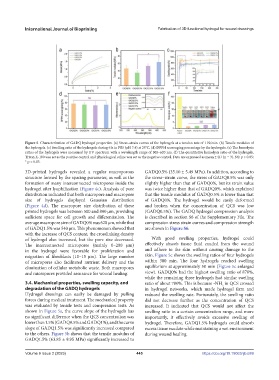
            Figure 5. Characterization of GADQ hydrogel properties. (a) Stress–strain curves of the hydrogels at a tension rate of 1 N/min. (b) Tensile modulus of
            the hydrogels. (c) Swelling ratio of the hydrogels during 6 h in PBS (pH 7.4) at 25°C. (d) DPPH scavenging percentage by the hydrogels. (e) The hemolysis
            ratios of the hydrogels were measured by UV spectrum with a wavelength range of 500–620 nm. (f) The quantitative hemolysis ratio of the hydrogels.
            Triton X-100 was set as the positive control and physiological saline was set as the negative control. Data are expressed as mean ± SD (n = 3). NS: p > 0.05;
            * p < 0.05.

            3D-printed hydrogels revealed a regular macroporous   GADQ0.5% (35.10 ± 5.49 MPa). In addition, according to
            structure formed by the spacing parameter, as well as the   the stress–strain curve, the stress of GADQ0.5% was only
            formation of many interconnected micropores inside the   slightly higher than that of GADQ0%, but its strain value
            hydrogel after lyophilization (Figure 4c). Analysis of pore   was twice higher than that of GADQ0%, which explained
            distribution indicated that both micropore and macropore   that the tensile modulus of GADQ0.5% is lower than that
            size of hydrogels displayed Gaussian distribution   of GADQ0%. The hydrogel would be easily deformed
            (Figure  4d). The macropore size distribution of these   and broken when the concentration of QCS was low
            printed hydrogels was between 500 and 800 µm, providing   (GADQ0.5%). The GADQ hydrogel compression analysis
            sufficient space for cell growth and differentiation. The   is described in section S6 of the Supplementary File. The
            average macropore size of GADQ0% was 620 μm, while that   compression stress strain curves and compression strength
            of GADQ1.5% was 540 μm. This phenomenon showed that   are shown in Figure S6.
            with the increase of QCS content, the crosslinking density
            of hydrogel also increased, but the pore size decreased.   With good swelling properties, hydrogel could
            The interconnected micropores (mainly 0–200 μm)    effectively absorb tissue fluid exuded from the wound
            in the  hydrogel were favorable  for proliferation and   and adhere to the skin without causing damage to the
            migration of fibroblasts (10–15 μm). The large number   skin. Figure 5c shows the swelling ratios of four hydrogels
            of micropores also facilitated nutrient delivery and the   within  300  min.  The  four  hydrogels  reached  swelling
            elimination of cellular metabolic waste. Both macropores   equilibrium at approximately 50 min (Figure 5c enlarged
            and micropores provided assurance for wound healing.  view). GADQ0% had the highest swelling ratio of 878%,
                                                               while the remaining three hydrogels had similar swelling
            3.4. Mechanical properties, swelling capacity, and   ratio of about 780%. This is because -NH  in QCS crossed
                                                                                                2
            degradation of the GADQ hydrogels                  in hydrogel networks, which made hydrogel firm and
            Hydrogel  dressings  can  easily  be  damaged  by  pulling   reduced the swelling rate. Fortunately, the swelling ratio
            forces during medical treatment. The mechanical property   did not decrease further as the concentration of QCS
            was evaluated by tensile tests and compression tests. As   increased. It indicated that QCS would not affect the
            shown in Figure 5a, the curve slope of the hydrogels has   swelling ratio in a certain concentration range, and more
            no significant difference when the QCS concentration was   importantly, it effectively avoids excessive swelling of
            lower than 1.5% (GADQ0.5% and GADQ1%), and the curve   hydrogel. Therefore, GADQ1.5% hydrogels could absorb
            slope of GADQ1.5% was significantly increased compared   excess tissue exudate while maintaining a wet environment
            to the others. Figure 5b shows that the tensile modulus of   during wound healing.
            GADQ1.5% (63.85 ± 9.95 MPa) significantly increased to


            Volume 9 Issue 2 (2023)                        445                          https://doi.org/10.18063/ijb.689

