


Page 454 - IJB-9-2
P. 454
International Journal of Bioprinting                    Fabrication of 3D functional hydrogel for wound dressings


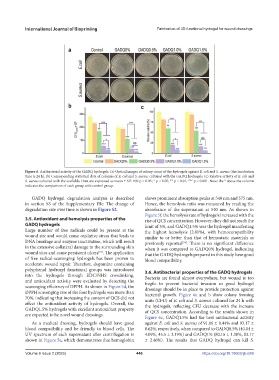
            Figure 6. Antibacterial activity of the GADQ hydrogels. (a) Optical images of colony count of the hydrogels against E. coli and S. aureus (the incubation
            time is 24 h). (b) Corresponding statistical data of colonies of E. coli and S. aureus cultured with the GADQ hydrogels. (c) Relative activity of E. coli and
            S. aureus cultured with the scaffolds. Data are expressed as mean ± SD. NS: p > 0.05; * p < 0.05, ** p < 0.01, *** p < 0.001. Note: the * above the column
            indicates the comparison of each group with control group.

               GADQ hydrogel degradation analysis is described   shows prominent absorption peaks at 540 nm and 575 nm.
            in section S3 of the Supplementary File. The change of   Hence, the hemolysis ratio was measured by reading the
            degradation rate over time is shown in Figure S2.  absorbance  of the supernatant at 540  nm. As shown in
                                                               Figure 5f, the hemolysis rate of hydrogels increased with the
            3.5. Antioxidant and hemolysis properties of the   rise of QCS concentration. However, they did not reach the
            GADQ hydrogels                                     limit of 5%, and GADQ1.5% was the hydrogel manifesting
            Large number of free radicals could be present at the   the highest hemolysis (2.81%), with hemocompatibility
            wound site and would cause oxidative stress that leads to   similar to or better than that of hemostatic materials as
            DNA breakage and enzyme inactivation, which will result   previously reported . There is no significant difference
                                                                               [54]
            in the extensive collateral damage to the surrounding skin   when it was compared to GADQ0% hydrogel, indicating
            wound sites and cause persistent ulcers . The application   that the GADQ hydrogels prepared in this study have good
                                           [53]
            of free radical-scavenging hydrogels has been proven to   blood compatibility.
            accelerate wound repair. Therefore, dopamine containing
            polyphenol hydroxyl functional groups was introduced   3.6. Antibacterial properties of the GADQ hydrogels
            into the hydrogels through EDC/NHS crosslinking,   Bacteria are found almost everywhere, but wound is too
            and antioxidant activity were evaluated by detecting the   fragile to prevent bacterial invasion so good hydrogel
            scavenging efficiency of DPPH. As shown in Figure 5d, the   dressings should be in place to provide protection against
            DPPH scavenging rate of the four hydrogels was more than   bacterial growth.  Figure 6a and  b show colony forming
            70%, indicating that increasing the content of QCS did not   units (CFU) of E. coli and S. aureus cultured for 24 h with
            affect the antioxidant activity of hydrogels. Overall, the   the hydrogels, reflecting CFU decrease with the increase
            GADQ1.5% hydrogels with excellent antioxidant property   of QCS concentration. According to the results shown in
            are expected to be novel wound dressings.
                                                               Figure 6c, GADQ1.5% had the best antibacterial activity
               As a medical dressing, hydrogels should have good   against E. coli and S. aureus of 91.06 ± 0.44% and 93.17 ±
            blood compatibility and be friendly to blood cells. The   0.62%, respectively, when compared to GADQ0.5% (40.04 ±
            UV spectrum of each supernatant after centrifugation is   4.09%, 45.5 ± 3.19%) and GADQ1% (80.16 ± 1.38%, 83.17
            shown in Figure 5e, which demonstrates that hemoglobin   ±  2.46%).  The  results  that  GADQ  hydrogel  can  kill  S.

            Volume 9 Issue 2 (2023)                        446                          https://doi.org/10.18063/ijb.689

