


Page 448 - IJB-9-2
P. 448
International Journal of Bioprinting                    Fabrication of 3D functional hydrogel for wound dressings


                                                               property, and biocompatible performance of the resulting
                                                               double-crosslinked GADQ hydrogel dressings as potential
                                                               medical applications for wound treatment.

                                                               2. Materials and methods

                                                               2.1. Materials
                                                               Chitosan  (90% degree of  deacetylation,  and average
                                                               molecular weight of  2  ×  10 g/mol),  gelatin  (gel  strength
                                                                                      5
                                                               240 g Bloom), sodium alginate (viscosity: 200–500 mPa·s),
                                                               2,3-epoxypropyltrimethylammonium chloride (GTMAC),
                                                               3-(3-Dimethylaminopropyl)-1-ethylcarbodiimide
                                                               hydrochloride (EDC), dopamine, and N-hydroxysuccinimide
                                                               (NHS) were provided by Adamas-beta® (Shanghai Titan
                                                               Scientific Co.). Anhydrous calcium chloride (purity 96%) was
                                                               obtained from Shanghai Maclin Biochemical Technology
                                                               Co., Ltd.
                                                                  The L929 fibroblast cell line was supplied from Qingqi
                                                               (Shanghai) Biotechnology Development Co., Ltd. Cell
                                                               Counting  Kit-8  (CCK8) was  purchased from Beyotime
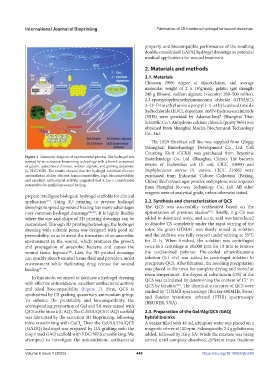
            Figure 1. Schematic diagram of experimental process. The hydrogel was   Biotechnology Co.,  Ltd.  (Shanghai,  China).  The bacteria
            printed by an extrusion bioprinting technology with a bioink composed
            of gelatin, quaternized chitosan, sodium alginate, and grafting dopamine   strains of  Escherichia coli (E. coli, CICC 10899) and
            by EDC/NHS. The results showed that the hydrogel exhibited effective   Staphylococcus aureus (S. aureus, CICC 21601) were
            antioxidation ability, efficient hemocompatibility, high biocompatibility,   purchased from Industrial Culture Collection (Beijing,
            and excellent antibacterial activity, suggested that it has a considerable   China). Beef extract, agar powder, and peptone were acquired
            potential to be applied in wound healing.          from Shanghai Bio-way Technology Co., Ltd. All other
                                                               reagents were of analytical grade, unless otherwise stated.
            prepare intelligent biological hydrogel scaffolds for clinical
            application . Using 3D printing to prepare hydrogel   2.2. Synthesis and characterization of QCS
                     [39]
            dressings to speed up wound healing has many advantages   The QCS was successfully synthesized based on the
                                                                                          [46]
            over common hydrogel dressings [40,41] . It is highly flexible   optimization of  previous  studies .  Briefly,  2 g  CS  was
            where the size and shape of 3D printing dressings can be   added to deionized water, and acetic acid was introduced
            customized. Through 3D printing technology, the hydrogel   to dissolve CS completely under the rapid stirring of the
            dressing with suitable pores was designed with good air   rotor. Six gram GTMAC was slowly mixed in solution
            permeability, so as to avoid the formation of an anaerobic   and the additive was fully reacted under stirring at 55°C
            environment  in  the  wound,  which  promotes  the  growth   for 21 h. When finished, the solution was centrifuged
            and propagation of anaerobic bacteria and causes the   twice in a centrifuge at 10,000 rpm for 10 min to remove
            wound  tissue hypoxia .  Last, the  3D-printed dressings   the undissolved polymer. Pre-cooled ethanol/acetone
                              [42]
            can quickly absorb exuded tissue fluid and provide a moist   solution (1:1 v/v) was added to centrifugal solution to
            environment while facilitating drug release for wound   precipitate QCS. After filtration, the resulting precipitation
            healing [43-45] .                                  was placed in the oven for complete drying and stored at
                                                               room temperature. The degree of substitution (DS) of the
               In this study, we aimed to fabricate a hydrogel dressing                                   -1
            with effective antioxidation, excellent antibacterial activity   QCS was calculated by determining the content of Cl  in
                                                                            [46]
                                                               QCS by titration . The chemical structures of QCS were
            and ideal biocompatibility (Figure 1). First, QCS is   studied by  H NMR spectroscopy (Bruker 600MHz, Swiss)
                                                                       1
            synthesized by CS grafting quaternary ammonium group.   and Fourier transform infrared (FTIR) spectroscopy
            To enhance the printability and biocompatibility, the   (BRUKER, USA).
            corresponding proportion of Gel and SA were mixed with
            QCS in the bioink (GAQ). The Gel/SA/QCS (GAQ) scaffold   2.3. Preparation of the Gel/Alg/QCS (GAQ)
            was fabricated by the extrusion 3D bioprinting, following   hybrid bioinks
            ionic crosslinking with CaCl  Then the Gel/SA/DA/QCS   A beaker filled with 40 mL ultrapure water was placed on a
                                   2.
            (GADQ) hydrogel was prepared by DA grafting onto the   magnetic stirrer at 100 rpm. Subsequently, 2.4 g gelatin was
            bioprinted GAQ scaffold with EDC/NHS crosslinking. We   added, followed by 0.6 g SA. While the mixture was being
            attempted to investigate the antioxidation, antibacterial   stirred until complete dissolved, different mass fractions

            Volume 9 Issue 2 (2023)                        440                          https://doi.org/10.18063/ijb.689

