


Page 443 - IJB-9-2
P. 443
International Journal of Bioprinting                           Bioprinting of DNA hydrogels for bone organoids


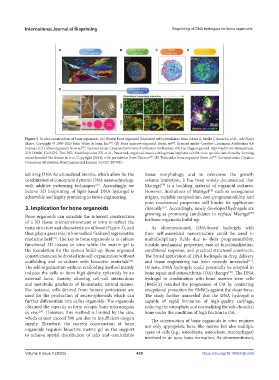
            Figure 3. In vitro construction of bone organoids. (A) Woven bone organoid. Reprinted with permission from Akiva A, Melke J, Ansari S, et al., Adv Funct
                                                                          [27]
                                                [26]
            Mater. Copyright © 1999-2023 John Wiley & Sons, Inc . (B) Bone marrow organoid. (from ref . licensed under Creative Commons Attribution 4.0
                                    [28]
            license). (C) Callus organoid (from ref . licensed under Creative Commons Attribution 4.0 license). (D) Cartilage organoid. Reprinted from Biomaterials,
            273:120820, Hall GN, Tam WL, Andrikopoulos KS, et al., Patterned, organoid-based cartilaginous implants exhibit zone specific functionality forming
                                                                                            [30]
            osteochondral-like tissues in vivo, Copyright (2021), with permission from Elsevier . (E) Trabecular bone organoid (from ref . licensed under Creative
                                                                 [29]
            Commons Attribution NonCommercial License 4.0 (CC BY-NC)
            utilizing DNA-functionalized bioinks, which allow for the   tissue morphology, and to overcome the growth
            combination of concepts in dynamic DNA nanotechnology   volume limitation. It has been widely documented that
            with  additive  patterning  techniques .  Accordingly,  we   Matrigel  is a building material of organoid cultures.
                                          [22]
                                                                      TM
            believe 3D bioprinting of light-based DNA hydrogel is   However, limitations of Matrigel  such as xenogenous
                                                                                          TM
            achievable and highly promising in tissue engineering.   origins, variable composition, non-programmability, and
                                                               poor mechanical properties still hinder its application
            3. Implication for bone organoids                  clinically . Accordingly, newly developed hydrogels are
                                                                      [25]
                                                                                                            TM
            Bone organoids can simulate the inherent construction   growing as promising candidates to replace Matrigel
            of a 3D tissue microenvironment in vitro to reflect the   for bone organoids build-up.
            main structure and characteristics of bone (Figure 3), and   As aforementioned, DNA-based hydrogels with
            thus, play a great role in biomedical field and regenerative   their self-assembled nanostructure could be used in
            medicine field . The key to bone organoids is to culture   multidisciplinary fields due to their programmability,
                       [23]
            functional 3D tissues  in vitro while the matrix gel is   tunable mechanical properties, ease of functionalization,
            the foundation for the system build-up. Bone organoid   conditional response, and practical structural constructs.
            construction can be divided into self-organization without   The broad application of DNA hydrogels in drug delivery
            scaffolding and co-culture with bioactive materials .   and tissue engineering has been recently unraveled .
                                                        [24]
                                                                                                           [31]
            The self-organization without scaffolding method mainly   Of note, DNA hydrogels could potentially be adopted in
            induces the cells to form high-density spheroids by an   bone repair and osteoarthritis (OA) therapy . The DNA
                                                                                                  [32]
            external force, thereby allowing cell–cell interactions   hydrogel in combination with bone marrow stem cells
            and metabolic gradients of biomimetic natural tissues.   (BMSCs) retarded the progression of OA by conferring
            For instance, cells derived from human periosteum are   exceptional protection for BMSCs against the shear force.
            used for the production of micro-spheroids which can   The study further unraveled that the DNA hydrogel is
            further differentiate into callus organoids. The organoids   capable of rapid formation of high-quality cartilage,
            obtained the capacity to form ectopic bone microorgans   reducing the osteophyte and normalizing the sub-chondral
            in vivo . However, this method is limited by the size,   bone under the condition of high friction in OA.
                 [28]
            which cannot exceed 500 μm due to insufficient oxygen   The construction of bone organoids  in vitro requires
            supply. Therefore, the current construction of bone   not only appropriate bone-like matrix but also multiple
            organoids requires bioactive matrix gel as the support   types of cells (e.g., osteoblasts, osteoclasts, macrophages)
            to  achieve  spatial  distribution  of  cells  and  controllable
                                                               involved in de novo bone formation. As aforementioned,


            Volume 9 Issue 2 (2023)                        435                          https://doi.org/10.18063/ijb.688

