


Page 207 - IJB-9-4
P. 207
International Journal of Bioprinting                    b-Ti21S TPMS FGPs produced by laser powder bed fusion


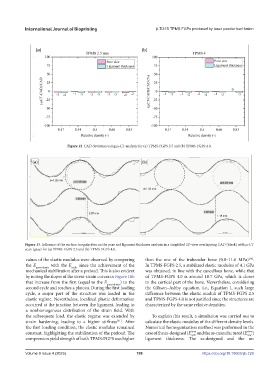
                              Figure 12. CAD deviation using m-CT analysis for (a) TPMS-FGPS 2.5 and (b) TPMS-FGPS 4.0.


            Figure 13. Influence of the surface irregularities on the pore and ligament thickness analysis in a simplified 2D view overlapping CAD (black) with m-CT
            scan (gray) for (a) TPMS-FGPS 2.5 and (b) TPMS-FGPS 4.0.
            values of the elastic modulus were observed by comparing   than the one of the trabecular bone (0.8–11.6 MPa) .
                                                                                                           [34]
            the  E quasi-elastic  with the  E cyclic  since the achievement of the   In TPMS-FGPS 2.5, a stabilized elastic modulus of 4.1 GPa
            mechanical stabilization after a preload. This is also evident   was obtained, in line with the cancellous bone, while that
            by noting the slopes of the stress-strain curves in Figure 16b   of TPMS-FGPS 4.0 is around 10.7 GPa, which is closer
            that increase from the first (equal to the E quasi-elastic ) to the   to the cortical part of the bone. Nevertheless, considering
            second cycle and reaches a plateau. During the first loading   the Gibson–Ashby equation, i.e., Equation I, such large
            cycle, a major part of the structure was loaded in the   difference between the elastic moduli of TPMS-FGPS 2.5
            elastic regime. Nevertheless, localized plastic deformation   and TPMS-FGPS 4.0 is not justified since the structures are
            occurred at the junction between the ligament, leading to   characterized by the same relative densities.
            a  nonhomogenous  distribution  of  the  strain  field.  With
            the  subsequent load, the  elastic regime was  extended  by   To explain this result, a simulation was carried out to
            strain hardening, leading to a higher stiffness . After   calculate the elastic modulus of the different density levels.
                                                   [61]
            the first loading condition, the elastic modulus remained   Numerical homogenization method was performed in the
            constant, highlighting the stabilization of the preload. The   case of the as-designed (E hom  and the as-manufactured (E hom )
                                                                                                           real
                                                                                   nom
            compression yield strength of both TPMS-FGPS was higher   ligament thickness. The as-designed and the as-
            Volume 9 Issue 4 (2023)                        199                          https://doi.org/10.18063/ijb.729

