


Page 219 - IJB-9-4
P. 219
International Journal of Bioprinting                Simulation-based comparative analysis of nozzles for bioprinting


                                                               them are the material used, i.e., plastic for the conical tip
                                                               and brass/stainless steel for the nozzle, and their internal
                                                               geometry, which can be seen in  Figure 2. Typically, the
                                                               conical tip is optimized for its use in clinical work with
                                                               low-viscosity materials.  On the contrary, 3D  printing
                                                               nozzles are designed and manufactured to reduce the force
                                                               needed to work with molten plastics, which are considered
                                                               high-viscosity materials. Nevertheless, to the best of our
                                                               knowledge, no studies have been performed to analyze
                                                               the  performance  of  standard  3D  printing  nozzles  with
                                                               bioprinting materials.

                                                                  Hence, the working hypothesis is that a standard 3D
                                                               printing nozzle could improve performance of a conical tip
                                                               standard  bioprinting  nozzle.  Consequently,  the  objective
                                                               of this work is to analyze the performance of an E3D V6
                                                               standard nozzle compared with a 22G conical tip for a
                                                               microextrusion bioprinting process using a commercial
                                                               bioink as hydrogel. Specifically, inlet (or dispensing)
                                                               and  outlet pressure,  volumetric  flow,  outlet  velocity
                                                               and maximum shear stress were analyzed. To study the
                                                               feasibility of the proposed nozzle, two different simulation
                                                               inlets were configured to simulate pneumatic and piston-
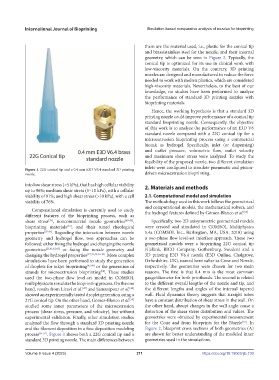
            Figure 1. 22G conical tip and a 0.4 mm E3D V6.4 standard 3D printing
            nozzle.                                            driven microextrusion bioprinting.
            into low shear stress (<5 kPa), that has high cellular viability   2. Materials and methods
            up to 96%; medium shear stress (5–10 kPa), with a cellular
            viability of 91%; and high shear stress (>10 kPa), with a cell   2.1. Computational model and simulation
            viability of 76%.                                  The methodology used in this work follows the geometrical
                                                               and computational models, the mathematical solvers, and
               Computational simulation is currently used to study                                       [50]
            different features of the bioprinting process, such as   the hydrogel features defined by Gómez-Blanco et al.
            shear stress , noncommercial nozzle geometries [40-42] ,   Specifically, two 2D axisymmetric geometrical models
                      [39]
            bioprinting materials , and their tuned rheological   were created and simulated in COMSOL Multiphysics
                              [43]
            properties [37,44] . Regarding the interaction between nozzle   5.4a (COMSOL Inc., Burlington, MA, USA, 2018) using
            geometry and hydrogel flow, two approaches can be   a two-phase flow level-set interface approach. These two
            followed: either fixing the hydrogel and changing the nozzle   geometrical models were a bioprinting 22G conical tip
            geometries [25,41,42,45]  or fixing the nozzle geometry and   (Cellink, BICO Company, Gothenburg, Sweden) and  a
            changing the hydrogel properties [37,39,43,46-48] . More complex   3D printing E3D V6.4 nozzle (E3D Online, Chalgrove,
            simulations have been performed to study the generation   Oxfordshire, UK), named hereinafter as Cone and Nozzle,
            of droplets for inkjet bioprinting [47,49]  or the generation of   respectively. The geometries were chosen for two main
            strands for microextrusion bioprinting . These studies   reasons. The first is that 0.4 mm is the most common
                                            [50]
            used the two-phase flow level-set model in COMSOL   gauge/diameter for both printheads. The second is related
            multiphysics to simulate the bioprinting process. On the one   to the different overall lengths of the nozzle and tip, and
                                    [47]
                                                        [49]
            hand, results from Liravi et al.  and Samanipour et al.    the different lengths and angles of the internal tapered
            showed an experimentally tested droplet generation using a   wall. Fluid dynamics theory suggests that straight tubes
                                                        [50]
            27G conical tip. On the other hand, Gómez-Blanco et al.     have a constant distribution of shear stress in the wall. On
            studied some inner parameters of the microextrusion   the other hand, abrupt changes in the wall angle cause a
            process (shear stress, pressure, and velocity), but without   distortion of the shear stress distribution and values. The
            experimental validation. Finally, other simulation studies   geometries were obtained by experimental measurement
            analyzed the flow through a standard 3D printing nozzle   for the Cone and from blueprints for the Nozzle . In
                                                                                                        [53]
            and the filament deposition in a fuse deposition modeling   Figure 2, blueprint cross sections of both geometries (A)
            process [51,52] . Figure 1 shows both a 22G conical tip and a   are shown for better understanding of the modeled inner
            standard 3D printing nozzle. The main differences between   geometries used in the simulations.

            Volume 9 Issue 4 (2023)                        211                         https://doi.org/10.18063/ijb.730

