


Page 463 - IJB-9-4
P. 463
International Journal of Bioprinting                   β-Ti21S auxetic FGPs produced by laser powder bed fusion


            Table 3. Summary of the 2D metrological characterization of the auxetic FGPS with θ = 15° and 25° for the different density
            relative levels
             Auxetic                       Strut thickness                            Pore size
             θ (°)  ρ  CAD (‑)  CAD (mm)  SEM (mm)  Deviation to CAD (%)  CAD (mm)  SEM (mm)  Deviation to CAD (%)
                    r
            15      0.34 lat.  1.17±0.02  1.10±0.03       6±2          1.12±0.47   1.43±0.03      28±56%
                    0.34 top  1.17±0.02  t : 0.99±0.02   t : 15±1      1.12±0.47   0.84±0.03      −25±34%
                                         bd
                                                         bd
                                         t : 1.15±0.04   t : −2±2
                                                         x
                                         x
                     0.49     1.47±0.03  1.41±0.04        −4±2         0.98±0.39   1.11±0.02      13±47%
                     0.66     1.78±0.10  1.71±0.05        −4±5         0.78±0.32   0.79±0.07       1±51%
            25      0.40 lat.  1.20±0.02  1.03±0.02      −14±1         1.00±0.40   1.16±0.02      16±48%
                    0.40 top  1.20±0.02  t : 0.96±0.01  t : −20±1      1.00±0.40   0.89±0.04      −11±40%
                                         bd
                                                         bd
                                         t : 1.12±0.08   t : -7±7
                                         x               x
                     0.58     1.51±0.06  1.32±0.05       −13±3         0.81±0.31   0.90±0.03      11±46%
                     0.75     1.80±0.24  1.57±0.04       −13±12        0.63±0.27   0.60±0.02      −5±44%
            SEM: Scanning electron microscopy, FGPS: Functionally graded porous structures, CAD: Computer-aided design
                         A                                   B


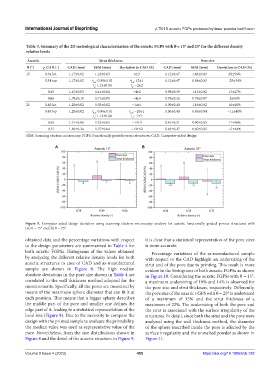
            Figure  5. Computer-aided design deviation using scanning electron  microscopy analysis for auxetic functionally graded porous structures  with
            (A) θ = 15° and (B) θ = 25°.

            obtained data and the percentage variations with respect   it is clear that a statistical representation of the pore sizes
            to the design parameters are summarized in Table 4 for   is more accurate.
            both auxetic FGPSs. Histograms of the values obtained   Percentage variations of the as-manufactured sample
            by analyzing the different relative density levels for both   with respect to the CAD highlight an undersizing of the
            auxetic structures in case of CAD and as-manufactured   strut and of the pore due to printing. This result is more
            sample are shown in  Figure  8. The high median    evident in the histograms of both auxetic FGPSs as shown
            absolute deviations in the pore size shown in Table 4 are   in Figure 10. Considering the auxetic FGPSs with θ = 15°,
            correlated to the wall thickness method adopted for the   a maximum undersizing of 19% and 14% is observed for
            measurements. Specifically, all the pores are measured by   the pore size and strut thickness, respectively. Differently,
            means of the maximum sphere diameter that can fit it at   the pore size of the auxetic FGPS with θ = 25° is undersized
            each position. This means that a bigger sphere describes   of a maximum of 15% and the strut thickness of a
            the middle part of the pore and smaller one defines the   maximum of 22%. The undersizing of both the pore and
            edge part of it, leading to a statistical representation of the   the strut is associated with the surface irregularity of the
            local size (Figure 9). Due to the necessity to compare the   structures. In detail, since both the strut and the pore were
            design with the printed sample to evaluate the printability,   analyzed using the wall thickness method, the diameter
            the median value was used as representative value of the   of the sphere inscribed inside the pore is affected by the
            pore. Nevertheless, from the size distributions shown in   surface irregularity and the unmelted powder as shown in
            Figure 8 and the detail of the auxetic structure in Figure 9,   Figure 11.


            Volume 9 Issue 4 (2023)                        455                          https://doi.org/10.18063/ijb.728

