


Page 465 - IJB-9-4
P. 465
International Journal of Bioprinting                   β-Ti21S auxetic FGPs produced by laser powder bed fusion


            Table 4. Summary of 3D metrological characterization of the auxetic FGPS with θ = 15° and 25° for the different density relative
            levels
             Auxetic                         Strut thickness                           Pore size
             θ (°)  ρ  CAD (‑)  CAD (mm)  µ‑CT (mm)  Deviation to CAD (%)  CAD (mm)  µ‑CT (mm)  Deviation to CAD (%)
                     r
            15         0.34     1.17±0.02  1.01±0.04       −14±5        1.12±0.47  0.98±0.38      −13±71
                       0.49     1.47±0.03  1.34±0.08       −9±7         0.98±0.39  0.79±0.33      −19±66
                       0.66     1.78±0.10  1.61±0.23      −10±18        0.78±0.32  0.69±0.28      −12±72
            25         0.40     1.20±0.02  0.94±0.06       −22±6        1.00±0.40  0.85±0.37      −15±71
                       0.58     1.51±0.06  1.24±0.11      −18±11        0.81±0.31  0.73±0.32      −10±74
                       0.75     1.80±0.24  1.44±0.16      −20±20        0.63±0.27  0.62±0.28      −2±87
            FGPS: Functionally graded porous structures, CAD: Computer-aided design

            A                      B


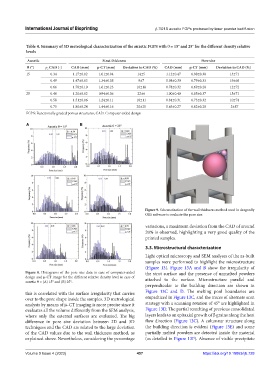
                                                               Figure 9. Schematization of the wall thickness method used in dragonfly
                                                               ORS software to evaluate the pore size.

                                                               variations, a maximum deviation from the CAD of around
                                                               20% is observed, highlighting a very good quality of the
                                                               printed samples.

                                                               3.3. Microstructural characterization
                                                               Light optical microscopy and SEM analyses of the as-built
                                                               samples were performed to highlight the microstructure
                                                               (Figure  13).  Figure  13A  and  B show the irregularity of
            Figure  8. Histograms of the pore size data in case of computer-aided   the strut surface and the presence of unmelted powders
            design and µ-CT image for the different relative density level in case of   attached to the surface. Microstructure parallel and
            auxetic θ = (A) 15° and (B) 25°.
                                                               perpendicular to the building direction are shown in
            this is correlated with the surface irregularity that carries   Figure  13C  and  D. The melting pool boundaries are
            over to the pore shape inside the samples. 3D metrological   empathized in Figure 13C, and the traces of alternate scan
            analysis by means of µ-CT imaging is more precise since it   strategy with a scanning rotation of 45° are highlighted in
            evaluates all the volume differently from the SEM analysis,   Figure 13D. The partial remelting of previous consolidated
            where only the external surfaces are evaluated. The big   layers leads to an epitaxial growth of β grains along the heat
            difference in pore size deviation between 2D and 3D   flow direction (Figure 13C). A columnar structure along
            techniques and the CAD are related to the large deviation   the building direction is evident (Figure 13E) and some
            of the CAD values due to the wall thickness method, as   partially melted powders are detected inside the material
            explained above. Nevertheless, considering the percentage   (as detailed in Figure 13F). Absence of visible precipitate


            Volume 9 Issue 4 (2023)                        457                          https://doi.org/10.18063/ijb.728

