


Page 260 - IJB-9-5
P. 260
International Journal of Bioprinting                      Antheraea pernyi silk fibroin bioinks for DLP 3D printing


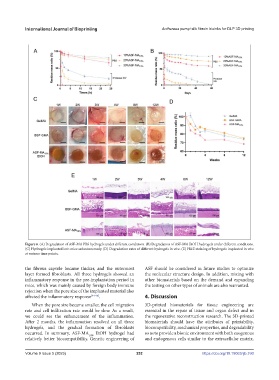
            Figure 6. (A) Degradation of ASF-MA PBS hydrogels under different conditions. (B) Degradation of ASF-MA EtOH hydrogels under different conditions.
            (C) Hydrogels implanted into mice subcutaneously. (D) Degradation rates of different hydrogels in vivo. (E) H&E staining of hydrogels implanted in vivo
            at various time points.

            the fibrous capsule became thicker, and the outermost   ASF should be considered in future studies to optimize
            layer formed fibroblasts. All three hydrogels showed an   the molecular structure design. In addition, mixing with
            inflammatory response in the pre-implantation period in   other biomaterials based on the demand and expanding
            mice, which was mainly caused by foreign body immune   the testing on other types of animals are also warranted.
            rejection when the pore size of the implanted material also
            affected the inflammatory response [44-46] .       4. Discussion
               When the pore size became smaller, the cell migration   3D-printed  biomaterials  for  tissue  engineering  are
            rate and cell infiltration rate would be slow. As a result,   essential in the repair of tissue and organ defect and in
            we could see the enhancement of the inflammation.   the regenerative reconstruction research. The 3D-printed
            After 2 months, the inflammation resolved on all three   biomaterials should have the attributes of printability,
            hydrogels, and the gradual formation of fibroblasts   biocompatibility, mechanical properties, and degradability
            occurred. In summary, ASF-MA 10%  EtOH hydrogel had   so as to provide a bionic environment with both exogenous
            relatively better biocompatibility. Genetic engineering of   and endogenous cells similar to the extracellular matrix.


            Volume 9 Issue 5 (2023)                        252                         https://doi.org/10.18063/ijb.760

