


Page 154 - IJB-9-6
P. 154
International Journal of Bioprinting                      3D printed bioactive dressings for burn wound treatment


                                                               of the dressings, and regulates the water release rate from
                                                               the hydrogel. Our findings showed that adding BBG to the
                                                               gelatin–alginate compound enables controlled water release
                                                               for up to 10 days, which is a key feature for burn wound
                                                               healing. The kinetics of water release from 3D-printed
                                                               dressings was fitted with the Higuchi model that refers
                                                               to transdermal patches and hydrogel films. Accordingly,
                                                               BBG content positively affected the in vivo wound healing
                                                               outcomes in terms of dermal/epidermal regeneration
                                                               and  restoration  of  hair  follicles  in  second-degree  burn
                                                               wound treatment. Overall, the addition of 20 wt% BBG
                                                               promotes the functionality of 3D-printed hydrogel dressing
                                                               by synergistic effect of continuous water release from
                                                               3D-printed dressings, favorable interactions between RGD
                                                               sequences in gelatin, acidic degradation of alginate, and
                                                               cumulative release of therapeutic ions from BBG.

                                                               4. Conclusion
                                                               In this study, we developed 3D-printed bioactive wound
                                                               dressings using gelatin, alginate, and borate glass (BBG).
                                                               The incorporation of BBG improved the tensile stiffness
                                                               and cell viability of the 3D-printed dressings and regulated
                                                               water release for maintaining optimal wound moisture.
                                                               The safety and efficacy of the 3D-printed hydrogel–BBG
                                                               dressings on second-degree burn wounds was assessed in a
                                                               rat model. The 3D-printed hydrogel dressings incorporated
                                                               with 20 wt% BBG showed faster wound closure and lower
                                                               wound contracture compared to the non-printed hydrogel
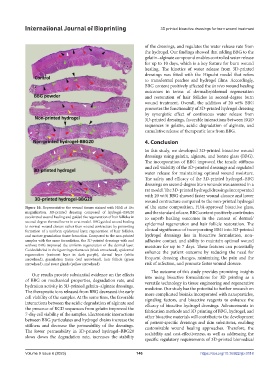
            Figure 10. Representative the wound tissues stained with H&E at 10×   of the same composition, FDA-approved bioactive glass,
            magnification. 3D-printed dressing composed of hydrogel–BBG20   and the standard of care. BBG content positively contributes
            accelerated wound healing and guided the regeneration of hair follicles in   to  superb  healing outcomes  in the context  of dermal/
            second-degree thermal burns in a rat model. BBG guided wound healing   epidermal regeneration  and hair  follicle  restoration. The
            to normal wound closure rather than wound contracture by promoting
            formation of a uniform epidermal layer, regeneration of hair follicles,   clinical significance of incorporating BBG into 3D-printed
            and mature granulation tissue formation. Compared to the non-printed   hydrogel dressings lies in bioactive formulation, non-
            samples with the same formulation, the 3D-printed dressings with and   adhesive contact, and ability to maintain optimal wound
            without BBG improved the uniform regeneration of the dermal layer.   moisture for up to 7 days. These features can potentially
            Guides labeled in the figure: hyperkeratosis (black arrowhead), epidermal   enhance the patient outcome by reducing the need for
            regeneration (outmost layer in dark purple), dermal layer (white
            arrowhead), granulation tissue (red arrowhead), hair follicle (green   frequent dressing changes, minimizing the pain and the
            arrowhead), and sweat glands (yellow arrowhead).   risk of infection, and promote faster wound closure.
                                                                  The outcome of this study provides promising insights
               Our results provide substantial evidence on the effects
            of BBG on mechanical properties, degradation rate, and   into using bioactive formulations for 3D printing as a
                                                               versatile technology in tissue engineering and regenerative
            hydration activity in 3D-printed gelatin–alginate dressings.   medicine. Our study has the potential to further research on
            The therapeutic ions released from BBG decreased the early   more complicated bioinks incorporated with nanoparticles,
            cell viability of the samples. At the same time, the favorable   signaling factors, and bioactive reagents to enhance the
            interactions between the acidic degradation of alginate and   efficacy of bioactive hydrogel dressings. Advancements in
            the presence of RGD sequences from gelatin improved the   fabrication methods and 3D printing of BBG, hydrogel, and
            7-day cell viability of the samples. Electrostatic interactions   other bioactive materials will contribute to the development
            between BBG particulates and hydrogel chains increase the   of patient-specific dressings and skin substitutes, enabling
            stiffness and decrease the permeability of the dressings.   customizable wound healing approaches. Therefore, the
            The lower permeability in 3D-printed hydrogel–BBG20   scalability and cost-effectiveness, as well as addressing the
            slows down the degradation rate, increases the stability
                                                               specific regulatory requirements of 3D-printed biomedical

            Volume 9 Issue 6 (2023)                        146                         https://doi.org/10.36922/ijb.0118

