


Page 167 - IJB-9-6
P. 167
International Journal of Bioprinting                                       3D printing in gastroenterology


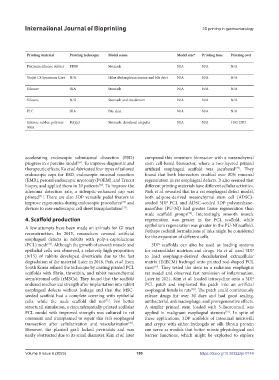
 Table 2. 3D printing for endoscopic operation, education, and simulation
 Author  Year  Application  Image   Data   Image processing   Output  3D printing software  Printing machine  Printing material  Printing technique  Model name  Model size*  Printing time  Printing cost
 source  format  software  format
 Lee et al. [65]  2018  Endoscopic biopsy CT  DICOM  3D Slicer v.4.5.0  STL  Netfabb professional   Clone S270 & Clone   Platinum silicone rubber  FDM  Stomach  N/A  N/A  N/A
 v.5  K300
 Yang et al. [61]  2018  ERCP  CT/MRI  DICOM  Mimics Innovation  STL  N/A  ProJet 4500  Visijet C4 Spectrum Core  N/A  Hilar cholangiocarcinoma and bile duct  N/A  N/A  N/A
 Suite v17.0
 Lee et al. [64]  2019  Endoscopic   CT  DICOM  3D Slicer v.4.5.0  STL  Netfabb professional   Form 2  Silicone  SLA  Stomach  N/A  N/A  N/A
 hemostasis  v.5
 Kwon et al. [67]  2020  ERCP  CT  N/A  In-house software  STL  MeshLab and   3DM Tough-3.6  Silicone  N/A  Stomach and duodenum  N/A  N/A  N/A
 MeshMixer
 Dhir et al. [109]  2015  EUS-guided   MRI  N/A  N/A  N/A  N/A  Viper SI2  PLC  SLA  Bile duct  N/A  N/A  N/A
 biliary drainage
 Holt et al. [68]  2018  Endoscopic   N/A  N/A  N/A  N/A  Solid Works 2014  Connex 260v  Silicone rubber, polymer   Polyjet  Stomach, duodenal ampulla  N/A  N/A  1482 USD
 ampullectomy  resin

 Abbreviations: CT, computed tomography; DICOM, digital imaging and communications in medicine; ERCP, endoscopic retrograde cholangiopan-
 creatography; FDM, fused deposition modeling; MRI, magnetic resonance imaging; PLC, polycarbonate; SLA, stereo lithography appearance; STL,
 stereolithography; *refers to the percentage of lifesize organs.

            accelerating endoscopic submucosal dissection (ESD)   compared this omentum bioreactor with a mesenchymal
            progress in a porcine model . To improve diagnostic and   stem cell-based bioreactor, where a two-layered printed
                                  [69]
            therapeutic effects, Ko et al. fabricated four types of tailored   artificial  esophageal  scaffold  was  incubated .  They
                                                                                                     [77]
            endoscopic caps for ESD, endoscopic mucosal resection   found that both  bioreactors enabled over 80% mucosal
            (EMR), peroral endoscopic myotomy (POEM), and Trucut   regeneration in rat esophageal defects. It also seemed that
            biopsy, and applied them in 39 patients . To improve the   different printing materials have different cellular activities.
                                           [70]
            adenoma detection rate, a sideoptic-enhanced cap was   Park et al. revealed that in a rat esophageal defect model,
            printed . There are also 3DP versatile pedal fixators to   both  adipose-derived  mesenchymal  stem  cell  (ADSC)-
                  [71]
            improve ergonomics during endoscopic procedures  and   seeded 3DP PCL  and ADSC-seeded 3DP  polyurethane-
                                                     [72]
            devices to ease endoscopic cell sheet transplantation .  nanofiber (PU-Nf) had greater tissue regeneration than
                                                     [73]
                                                               nude  scaffold  groups .  Interestingly,  smooth  muscle
                                                                                 [78]
            4. Scaffold production                             regeneration was greater in the PCL scaffold, while
                                                               epithelium regeneration was greater in the PU-Nf scaffold.
            A few attempts have been made on animals for GI tract   Perhaps cocktail formulations of inks might be considered
            reconstruction. In 2015, researchers covered artificial   for the expansion of different cells.
            esophageal defects in rabbits with poly-ε-caprolactone
                     [74]
            (PCL) mesh . Although the growth of smooth muscle and   3DP  scaffolds  can  also  be  used  as  loading  systems
            epithelial cells was observed, a relatively high proportion   for extracellular matrices and drugs. Ha et al. used 3DP
            (9/15) of rabbits developed diverticula due to the fast   to load esophagus-derived decellularized extracellular
            degradation of the material. Later in 2016, Park et al. from   matrix (EdECM) hydrogel onto printed rod-shaped PCL
            South Korea refined the technique by coating printed PCL   stent . They tested the stent in a radiation esophagitis
                                                                   [79]
            scaffolds with fibrin, thrombin, and rabbit mesenchymal   rat model and observed fast remission of inflammation.
            stem/stromal cells (rMSCs). They found that the scaffold   Later in 2021, Kim et al. loaded tetracycline onto a 3DP
            endured mechanical strength after implantation into rabbit   PCL patch and implanted the patch into an artificial
            esophageal defects without leakage and that the MSC-  esophageal fistula in rats . The patch could continuously
                                                                                   [80]
            seeded scaffold had a complete covering with epithelial   release drugs for over 30 days and had good sealing,
            cells, while the nude scaffold did not . For better   antibacterial, antimacrophage, and proregenerative effects.
                                              [75]
            structural simulation, a circumferentially printed acellular   A similar printed stent loaded with 5-fluorouracil was
            PCL model with improved strength was cultured in rat   applied in malignant esophageal stenosis . In spite of
                                                                                                 [81]
            omentum and transplanted to repair this rat’s esophageal   these applications, 3DP scaffolds of intestinal microvilli
            transection after cellularization and vascularization .   and  crypts  with  either  hydrogels  or  silk  fibroin  protein
                                                        [76]
            However, the planted graft lacked peristalsis and was   can serve as models that better mimic physiological and
            easily obstructed due to its small diameter. Kim et al. later   barrier functions, which might be exploited to explore


            Volume 9 Issue 6 (2023)                        159                        https://doi.org/10.36922/ijb.0149

