


Page 171 - IJB-9-6
P. 171
International Journal of Bioprinting                                       3D printing in gastroenterology


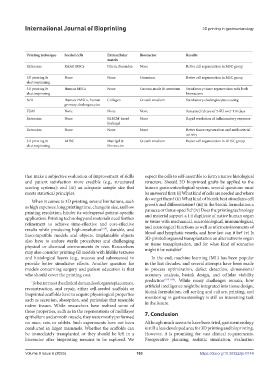
 Table 4. 3D printing of decellularized scaffolds
 Author  Year  Animal   Printed object  Application  Printing machine  Printing   Printing technique  Seeded cells  Extracellular   Bioreactor  Results
 model  material                               matrix
 Park et al. [75]  2016  Rabbit  Artificial esophageal patch  Repairment of partial esophageal   3D Bioplotter  PCL  Extrusion  Rabbit MSCs  Fibrin, thrombin  None  Better cell regeneration in MSC group
 defect
 Chung et al. [76]  2018  Rat  Tubular scaffold  Repairment of transectional   BT-3000  PCL  3D printing &   None  None  Omentum  Better cell regeneration in MSC group
 esophageal defect  electrospinning
 Kim et al. [77]  2019  Rat  Esophageal graft  Repairment of transectional   3D Bioplotter  PCL/PU  3D printing &   Human MSCs  None  Custom-made & omentum  Satisfactory tissue regeneration with both
 esophageal defect  electrospinning                                             bioreactors
 Boyer et al. [95]  2019  In vitro  Biliary stent  Biliary procedures  MakerBot   PVA  N/A  Human PMSCs, human   Collagen  Growth medium  Satisfactory cholangiocytes coating
 Replicator                  primary cholangiocytes
 Fouladian et al. [81]  2020  In vitro  Esophageal stent  Malignant esophageal stenosis  Ultimaker S5  PU+5-FU  FDM  None  None  None  Sustained release of 5-FU over 110 days
 Ha et al. [79]  2021  Rat  Esophageal stent  Treating radiation esophagitis  2RPS  PCL  Extrusion  None  EdECM-based   None  Rapid resolution of inflammatory response
                                               hydrogel
 Kim et al. [80]  2021  Rat  Artificial esophageal patch  Repairment of partial esophageal   Simplify 3D v. 4.0  PCL+TCN  Extrusion  None  None  None  Better tissue regeneration and antibacterial
 defect                                                                         activity
 Park et al. [78]  2021  Rat  Artificial esophageal patch  Repairment of partial esophageal   3D Bioplotter  PCL/PU  3D printing &   ADSC  Matrigel &   Growth medium  Better cell regeneration in ADSC group
 defect     electrospinning                    fibronectin

 Abbreviations: ADSC, adipose-derived mesenchymal stem cell; EdECM, esophagus-derived decellularized extracellular matrix; FDM, fused deposition
 modeling; 5-FU, 5-fluorouracil; MSCs, mesenchymal stem cells; PMSCs, placental mesenchymal stem cells; PCL, polycaprolactone; PU, polyurethane;
 PVA, polyvinyl alcohol; TCN, tetracycline.

            that make a subjective evaluation of improvement of skills   expect the cells to self-assemble to form a native histological
            and patient satisfaction more credible (e.g., structured   structure.  Should  3D  bioprinted  grafts  be  applied to the
            scoring systems); and (iii)  an adequate sample size that   human gastroenterological system, several questions must
            meets statistical principles.                      be answered first: (i) What kind of cells are needed and where

               When it comes to 3D printing, several limitations, such   do we get them? (ii) What kind of bioink best stimulates cell
            as high expenses, long printing time, change in size, and low   growth and differentiation? (iii) Is the bioink formulation a
            printing resolution, hinder its widespread patient-specific   panacea or tissue-specific? (iv) Does the printing technology
            application. Printing technology and materials need further   and material support a 1:1 duplicate of native human organ
            refinement  to  achieve  time-effective  and  cost-effective   or tissue with mechanical, microbiological, immunological,
            results while producing high-resolution [104] , durable, and   and neurological functions as well as microenvironments of
            biocompatible models and objects. Implantable objects   blood and lymphatic vessels, and how fast can it be? (v) Is
            also have to endure sterile procedures and challenging   3D-printed organoid transplantation an alternative to organ
            physical or chemical environments  in vivo. Researchers   or tissue transplantation, and for what kind of scenarios
            may also consider printing GI models with lifelike textures   might it be suitable?
            and histological layers (e.g., mucosa and submucosa) to   In the end, machine learning (ML) has been popular
            provide  better  simulative  effects.  Another  question  for   in the last decades, and several attempts have been made
            models concerning surgery and patient education is that   in  process  optimization,  defect  detection,  dimensional
            who should cover the printing cost.                accuracy analysis, bioink design, and cellular viability
                                                               prediction [105-108] . While many challenges remain, how
               To better meet the clinical demands of organ replacement,
            reconstruction, and repair, either cell-seeded scaffolds or   artificial intelligence might be integrated into tissue design,
                                                               bioink formulation, cell sorting and culture, printing, and
            bioprinted scaffolds have to acquire physiological properties   monitoring in gastroenterology is still an interesting task
            such as secretion, absorption, and peristalsis that resemble   in the future.
            native tissues. While researchers have realized some of
            those properties, such as in the regenerations of multilayer   7. Conclusion
            epithelium and smooth muscle, they were mostly performed
            on mice, rats, or rabbits. Such experiments have not been   Although much seems to have been tried, gastroenterology
            conducted in larger mammals. Whether the scaffolds can   is still a less developed area for 3D printing and bioprinting.
            be immediately transplanted or they should be left in a   However, it is promising for vast clinical requirements.
            bioreactor after bioprinting remains to be explored. We   Preoperative planning,  realistic  simulation, evaluation


            Volume 9 Issue 6 (2023)                        163                        https://doi.org/10.36922/ijb.0149

