


Page 203 - IJB-9-6
P. 203
International Journal of Bioprinting                              Attractiveness of 4D printing in medical field


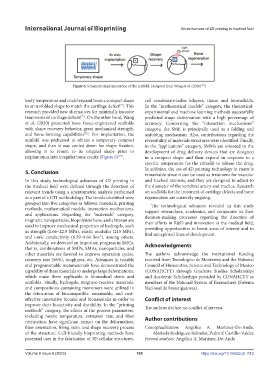
                                Figure 6. Schematic implementation of the scaffold. (Adapted from Wang et al. (2020) )
                                                                                       [72]

            body temperature and could expand from a compact shape   cell condensate-laden bilayers, tissue, and bioscaffolds.
            to an unfolded shape to match the cartilage defect . This   In the “mathematical models” category, the  theoretical-
                                                    [71]
            research provided new alternatives for minimally invasive   experimental and machine learning methods successfully
            treatments of cartilage defects . On the other hand, Wang   predicted shape deformation with a high percentage of
                                   [71]
            et al. (2020)  presented bone tissue-engineered scaffolds   accuracy. Concerning the “interaction mechanisms”
            with shape recovery behavior, great mechanical strength,   category, the SME is principally used as a folding and
            and  bone-forming  capabilities .  For  implantation,  the   unfolding mechanism. Also, contributions regarding the
                                     [72]
            scaffold was preheated to obtain a temporary compact   reversibility of materials structures were identified. Finally,
            shape, and then it was cooled down for shape fixation,   in the “applications” category, SMMs are oriented to the
            allowing  it  to  return  to  its  original  shape  prior  to   development of drug delivery devices that are designed
            implantation into irregular bone cracks (Figure 6) .  in a compact shape and then expand in response to a
                                                   [72]
                                                               specific temperature (as the stimuli) to release the drug.
                                                               In addition, the use of 4D printing technology in stents is
            5. Conclusion                                      remarkable since it can be used as treatment for vascular
            In this study, technological advances of 4D printing in   and tracheal stenosis, and they are designed to adjust to
            the medical field were defined through the detection of   the diameter of the vertebral artery and trachea. Research
            relevant trends using a scientometric analysis performed   on scaffolds for the treatment of cartilage defects and bone
            as a part of a CTI methodology. The trends identified were   regeneration are currently ongoing.
            grouped into five categories as follows: materials, printing   The technological advances revealed in this study
            methods, mathematical models, interaction mechanisms,   support researchers, academics, and companies in their
            and applications. Regarding the “materials” category,   decision-making processes regarding the direction of
            magnetic nanoparticles, biopolyurethane, and chitosan are   their efforts in R&D and innovation in the medical field,
            used to improve mechanical properties of hydrogels, such   providing opportunities to boost areas of interest and to
            as strength (0.66–22.9 MPa), elastic modulus (215 MPa),   find unexplored lines of development.
            and ionic conductivity (8.59–9.64  Sm ), among others.
                                           –1
            Additionally, we detected an important progress in SMCs,   Acknowledgments
            that is, combinations of SMPs, SMAs, nanoparticles, and
            other materials are favored to improve operation cycles,   The authors acknowledge the institutional funding
            recovery rate (98%), toughness, etc. Advances in tunable   received from Tecnologico de Monterrey and the National
            and programmable metamaterials have demonstrated the   Council of Humanities, Science and Technology of Mexico
            capability of these materials to undergo large deformations,   (CONAHCYT) through Graduate Studies Scholarships
            which make them applicable in biomedical stents and   and Academic Scholarships provided by CONAHCYT as
            scaffolds. Finally, hydrogels, magneto-reactive materials,   members of the National System of Researchers (Sistema
            and compositions containing monomers were utilized in   Nacional de Investigadores).
            the fabrication of biocompatible, sustainable, and cost-
            effective innovative bioinks and bionanoinks in order to   Conflict of interest
            improve their bioactivity and durability. In the “printing   The authors declare no conflict of interest.
            methods” category, the effects of the process parameters,
            including nozzle temperature, extrusion rate, and fiber   Author contributions
            orientation, have significant impact on the deformation,
            fiber orientation, fixing ratio, and shape recovery process   Conceptualization: Angelica A. Martinez-De-Anda,
            of the structure. Cell-friendly bioprinting methods have   Marisela Rodriguez-Salvador, Pedro F. Castillo-Valdez
            potential uses in the fabrication of 3D cellular structures,   Formal analysis: Angelica A. Martinez-De-Anda


            Volume 9 Issue 6 (2023)                        195                         https://doi.org/10.36922/ijb.1112

