


Page 30 - IJB-9-6
P. 30
International Journal of Bioprinting                        CFD analysis for multimaterial bioprinting conditions


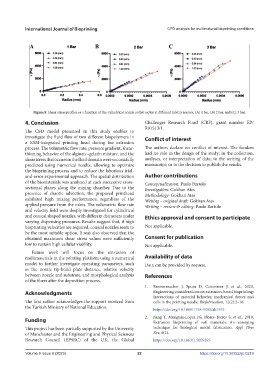
               Figure 9. Shear stress profiles as a function of the cylindrical nozzle outlet radius at different inlet pressures. (A) 1 bar, (B) 2 bar, and (C) 3 bar.

            4. Conclusion                                      Challenges Research Fund (CRF), grant number EP/
                                                               R01513/1.
            The CFD model presented in this study enables to
            investigate the fluid flow of two different biopolymers in   Conflict of interest
            a KSM-integrated printing head during the extrusion
            process. The volumetric flow rate, pressure gradient, shear-  The authors declare no conflict of interest. The funders
            thinning behavior of the alginate–gelatin mixture, and the   had no role in the design of the study; in the collection,
            shear stress that occurs in the fluid domain were successfully   analyses, or interpretation of data; in the writing of the
            predicted using  numerical  results, allowing  to optimize   manuscript; or in the decision to publish the results.
            the bioprinting process and to reduce the laborious trial-
            and-error experimental approach. The spatial distribution   Author contributions
            of the biomaterials was analyzed at each successive cross-  Conceptualization: Paulo Bartolo
            sectional planes along the mixing chamber. Due to the   Investigation: Gokhan Ates
            presence of chaotic advection, the proposed printhead   Methodology: Gokhan Ates
            exhibited high mixing performance, regardless of the   Writing – original draft: Gokhan Ates
            applied pressure from the inlets. The volumetric flow rate   Writing – review & editing: Paulo Bartolo
            and velocity field were deeply investigated for cylindrical
            and conical shaped nozzles, with different diameters under   Ethics approval and consent to participate
            varying dispensing pressures. Results suggest that, if high
            bioprinting velocities are required, conical nozzles seem to   Not applicable.
            be the most suitable option. It was also observed that the
            obtained maximum shear stress values were sufficiently   Consent for publication
            low to sustain high cellular viability.            Not applicable.
               Future work will focus on the extrusion of
            multimaterials in the printing platform using a numerical   Availability of data
            model to further investigate operating parameters, such   Data can be provided by request.
            as the nozzle tip-build plate distance, relative velocity
            between nozzle and substrate, and morphological analysis   References
            of the fibers after the deposition process.
                                                               1.   Emmermacher J, Spura D, Cziommer J,  et  al., 2020,
            Acknowledgments                                       Engineering considerations on extrusion-based bioprinting:
                                                                  Interactions of material behavior, mechanical forces and
            The first author acknowledges the support received from   cells in the printing needle. Biofabrication, 12(2):2–16.
            the Turkish Ministry of National Education.
                                                                  https://doi.org/10.1088/1758-5090/ab7553
                                                               2.   Jiang  T,  Munguia-Lopez  JG,  Flores-Torres  S,  et al.,  2019,
            Funding                                               Extrusion bioprinting of soft materials: An emerging
            This project has been partially supported by the University   technique for biological model fabrication.  Appl Phys
            of Manchester and the Engineering and Physical Sciences   Rev, 6(1).
            Research Council (EPSRC)  of the UK, the Global       https://doi.org/10.1063/1.5059393


            Volume 9 Issue 6 (2023)                         22                        https://doi.org/10.36922/ijb.0219

