


Page 408 - IJB-9-6
P. 408
International Journal of Bioprinting                                   Biofabrication for islet transplantation


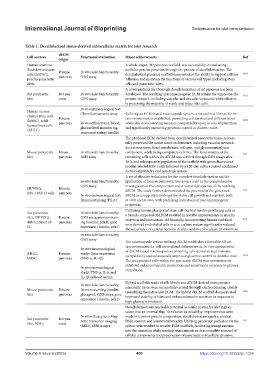
            Table 1. Decellularized tissue-derived extracellular matrix for islet research
                          dECM
             Cell sources          Functional evaluation  Major achievements                             Ref
                          origin
             Human amniotic                            A whole organ, 3D pancreas scaffold, was successfully created using
             fluid-derived stem   Porcine   In vitro islet functionality:   acellular porcine pancreas through the process of decellularization. The
             cells (hAFSC),   pancreas  GSIS assay     decellularized pancreas scaffold demonstrated the ability to support cellular   [106]
             porcine pancreatic                        adhesion and maintain the functions of various cell types, including stem
             islets                                    cells and pancreatic islets.
                                                       A novel protocol for thorough decellularization of rat pancreas has been
             Rat pancreatic   Rat pan-  In vitro islet functionality:   developed. The resulting non-immunogenic ECM retains the organ-specific   [107]
             islet        creas    GSIS assay          protein network, including vascular and ductular structures while effective-
                                                       ly preserving the majority of viable and intact islet cells.
                                   In vivo immunological test:
             Human mesen-          Chemiluminescent array   Utilizing an ECM-based microcapsule system, a natural and fibrous 3D mi-
             chymal stem cells   Porcine               croenvironment is established, promoting cell survival and differentiation
             (hMSC), adult   pancreas  In vivo efficacy test: Blood   while also demonstrating immune compatibility upon in vivo implantation   [108]
             human liver cells     glucose level monitoring,   and significantly improving glycemic control in diabetic mice.
             (AHLC)
                                   immunostaining (insulin)
                                                       The produced ECM derived from decellularized pancreatic tissue success-
                                                       fully preserved the native tissue architecture, including vascular network,
                                                       ductal structures, basal membranes, collagen, and glycosaminoglycan
             Mouse pancreatic   Mouse   In vitro islet functionality:   component, while being completely cell-free. The functionality of the   [72]
             islet        pancreas  ASIS assay         remaining cells within the dECM was verified through GSIS assays after
                                                       48 h, and subsequent repopulation of the scaffold with green fluorescent
                                                       protein-labeled INS-1 cells followed by a 120-day culture period confirmed
                                                       its biocompatibility and non-toxic nature.
                                                       A set of effective techniques for the complete decellularization and de-
                                   In vitro islet functionality:   lipidization of human pancreatic tissue were used in the comprehensive
                                   GSIS assay          investigation of the composition and structural properties of the resulting
             HUVECs,      Human                        dECM. The study further demonstrated the potential of the generated   [73]
             INS-1 832/13 cells  pancreas
                                   In vivo immunological test:  dECM as a supportive hydrogel for viable cell growth and survival, both
                                   Immunostaining (HLA)  in vitro and in vivo, with promising indications of non-immunogenic
                                                       properties.
                                                       Culturing human pluripotent stem cell-derived insulin-producing cells in
             Rat pancreatic        In vitro islet functionality:   a bioink composed of dECM resulted in notable improvements in insulin
             islet, HUVECs,   Porcine   GSIS assay, immunostain-  secretion and maturation. Additionally, incorporating human umbilical   [71]
             differentiated-iP-  pancreas  ing (insulin, pdx1), gene   vein-derived endothelial cells in a co-culture system significantly reduced
             SC                    expression (insulin, pdx1)
                                                       the occurrence of central necrosis in islets within a 3D culture environment.
                                   In vitro islet functionality:
                                   GSIS assay
                                                       The microcapsule system utilizing dECM establishes a favorable 3D mi-
                                                       croenvironment for cell survival and differentiation. In vivo implantation
                                   In vitro immunological
             AHLC,        Porcine   study: Gene expression   of dECM-based microcapsules containing cells demonstrated immune   [109]
                                                       compatibility and substantially improved glycemic control in diabetic mice.
             hMSC         pancreas  (TNF-α, IL-1β)
                                                       The encapsulated cells within the pancreatic dECM microenvironment
                                                       exhibited enhanced insulin production and secretion in response to glucose
                                   In vivo immunological   stimulation.
                                   study: TNF-α, IL-6, and
                                   IL-1β in blood serum
                                                       Hybrid scaffolds made of silk fibroin and dECM derived from porcine
                                   In vitro islet functionality:
             Mouse pancreatic   Porcine   Immunostaining (insulin,   pancreatic tissue were successfully created through electrospinning, closely   [110]
                                                       resembling the native islet ECM. The hybrid dECM scaffold demonstrated
             islet        pancreas  glucagon), GSIS assay, gene   improved viability of islets and enhanced insulin secretion in response to
                                   expression (insulin, pdx1)
                                                       high glucose stimulation.
                                                       Decellularized pancreas holds potential as a safer matrix for islet implan-
                                                       tation into an omental flap. To enhance its suitability, improvements were
                                   In vivo efficacy test: Mag-  made in terms of protein composition, decellularization quality, residual
             Rat pancreatic   Rat pan-  netic resonance imaging   DNA content, and anatomical integrity. Utilizing pancreatic perfusion via the   [74]
             islet, MSCs  creas
                                   (MRI), SEM images   splenic vein resulted in smaller ECM scaffolds, facilitating transplantation
                                                       into the omentum while meeting requirements such as complete removal of
                                                       cellular components and preservation of pancreatic extracellular proteins.


            Volume 9 Issue 6 (2023)                        400                        https://doi.org/10.36922/ijb.1024

