


Page 413 - IJB-9-6
P. 413
International Journal of Bioprinting                                   Biofabrication for islet transplantation


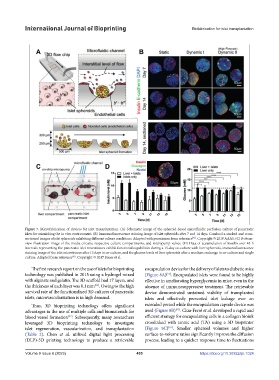
            Figure 7. Microfabrication of devices for islet transplantation. (A) Schematic image of the spheroid-based microfluidic perfusion culture of pancreatic
            islets for mimicking the in vivo environment. (B) Immunofluorescence staining image of islet spheroids after 7 and 14 days. Confocal z-stacked and cross-
            sectioned images of islet spheroids exhibiting different culture conditions. Adapted with permission from reference . Copyright © 2019 AAAS. (C) Bottom-
                                                                                   [81]
            view illustration image of the media circuits, respective culture compartments, and micropump valves. (D) Data of accumulation of insulin over 48-h
            intervals representing the pancreatic islet microtissues exhibit functional capabilities during a 15-day co-culture with liver spheroids, immunofluorescence
            staining image of the islet microtissues after 15 days in co-culture, and the glucose levels of liver spheroids after a medium exchange in co-culture and single
            culture. Adapted from reference . Copyright © 2017 Bauer et al.
                                [83]
               The first research report on the use of islets for bioprinting   encapsulation device for the delivery of islets to diabetic mice
            technology was published in 2015 using a hydrogel mixed   (Figure 8A) . Encapsulated islets were found to be highly
                                                                        [93]
            with alginate and gelatin. The 3D scaffold had 17 layers, and   effective in ameliorating hyperglycemia in mice, even in the
            the thickness of each layer was 0.1 mm . Owing to the high   absence of immunosuppressive treatment. The retrievable
                                         [91]
            survival rate of the functionalized 3D cultures of pancreatic   device demonstrated sustained viability of transplanted
            islets, microvascularization is in high demand.    islets and effectively prevented islet leakage over an
               Thus, 3D bioprinting technology offers significant   extended period while the encapsulation capsule device was
                                                                            [93]
            advantages in the use of multiple cells and biomaterials for   used (Figure 8B) . Clua-Ferré et al. developed a rapid and
            blood vessel formation . Subsequently, many researchers   efficient strategy for encapsulating cells in a collagen bioink
                              [92]
            leveraged 3D bioprinting technology to investigate   crosslinked with tannic acid (TA) using a 3D bioprinter
            islet regeneration, vascularization, and transplantation   (Figure 8C) . Smaller spheroid volumes and higher
                                                                         [94]
            (Table 2). Chen  et al. utilized digital light processing   surface-to-volume ratios significantly improve the diffusion
            (DLP)-3D printing technology to produce a retrievable   process, leading to a quicker response time to fluctuations

            Volume 9 Issue 6 (2023)                        405                        https://doi.org/10.36922/ijb.1024

