


Page 415 - IJB-9-6
P. 415
International Journal of Bioprinting                                   Biofabrication for islet transplantation


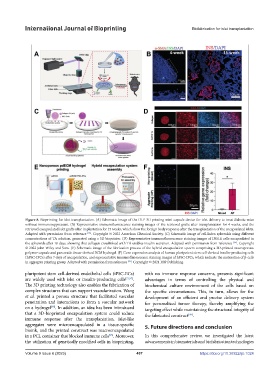
            Figure 8. Bioprinting for islet transplantation. (A) Schematic image of the DLP-3D printing mini-capsule device for islet delivery to treat diabetic mice
            without immunosuppressant. (B) Representative immunofluorescence staining images of the retrieved grafts after transplantation for 4 weeks, and the
            retrieved encapsulated islet grafts after implantation for 15 weeks, which show the foreign body response after the transplantation of the encapsulated islets.
            Adapted with permission from reference  [93] . Copyright © 2022 American Chemical Society. (C) Schematic image of cell-laden spheroids using different
            concentrations of TA solution, generated using a 3D bioprinter. (D) Representative immunofluorescence staining images of INS1E cells encapsulated in
            the spheroids after 10 days, showing that collagen crosslinked with TA enables insulin secretion. Adapted with permission from reference  [94] . Copyright
            © 2022 John Wiley and Sons. (E) Schematic image of the fabrication process of the hybrid encapsulation system comprising a 3D-printed macroporous
            polymer capsule and pancreatic tissue-derived ECM hydrogel. (F) Gene expression analysis of human pluripotent stem cell-derived insulin-producing cells
            (hPSC-IPCs) after 7 days of encapsulation, and representative immunofluorescence staining images of hPSC-IPCs, which indicate the maturation of β-cells
                                                        [95]
            in aggregate printing group. Adapted with permission from reference  . Copyright © 2021 IOP Publishing.
            pluripotent stem cell-derived endothelial cells (iPSC-ECs)   with no immune response concerns, presents significant
            are widely used with islet or insulin-producing cells [71,97] .   advantages in terms of controlling the physical and
            The 3D printing technology also enables the fabrication of   biochemical culture environment of the cells based on
            complex structures that can support vascularization. Wang   the specific circumstances. This, in turn, allows for the
            et al. printed a porous structure that facilitated vascular   development of an efficient and precise delivery system
            penetration and interactions to form a vascular network   for personalized tumor therapy, thereby amplifying the
            on a hydrogel . In addition, an idea has been introduced   targeting effect while maintaining the structural integrity of
                       [98]
            that a 3D-bioprinted encapsulation system could reduce   the fabricated construct .
                                                                                 [99]
            immune response after the transplantation. Islet-like
            aggregates were microencapsulated in a tissue-specific   5. Future directions and conclusion
            bioink, and the printed construct was macroencapsulated
            in a PCL container that blocked immune cells . Moreover,   In this comprehensive review, we investigated the latest
                                               [95]
            the utilization of genetically modified cells in bioprinting,   advancements in biomaterials and biofabrication technologies

            Volume 9 Issue 6 (2023)                        407                        https://doi.org/10.36922/ijb.1024

