


Page 414 - IJB-9-6
P. 414
International Journal of Bioprinting                                   Biofabrication for islet transplantation


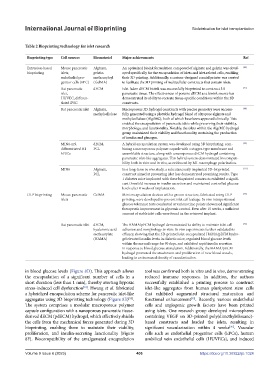
            Table 2 Bioprinting technology for islet research

             Bioprinting type  Cell sources  Biomaterial  Major achievements                             Ref
             Extrusion-based   Mouse pancreatic   Alginate,  An optimized bioink formulation composed of alginate and gelatin was devel-  [89]
             bioprinting   islets,       gelatin     oped specifically for the encapsulation of islets and islet-related cells, enabling
                           endothelial pro-  methacryloyl   their 3D printing. Additionally, a custom-designed coaxial printer was created
                           genitor cells (EPC)  (GelMA)  to facilitate the 3D printing of multicellular constructs that contain islets.
                           Rat pancreatic   dECM     Islet-laden dECM bioink was successfully bioprinted to construct 3D   [71]
                           islet,                    pancreatic tissue. The effectiveness of porcine dECM as a bioink source has
                           HUVEC, differen-          demonstrated its ability to recreate tissue-specific conditions within the 3D
                           tiated iPSC               constructs.
                           Rat pancreatic islet  Alginate,  Macroporous 3D hydrogel constructs with precise geometry were success-  [88]
                                         methylcellulose  fully generated using a plottable hydrogel blend of ultrapure alginate and
                                                     methylcellulose (Alg/MC), both of which have been approved clinically. This
                                                     enabled the encapsulation of pancreatic islets while preserving their viability,
                                                     morphology, and functionality. Notably, the islets within the Alg/MC hydrogel
                                                     group maintained their viability and functionality, sustaining the production
                                                     of insulin and glucagon.
                           MIN6-m9,      dECM,       A hybrid encapsulation system was developed using 3D bioprinting, com-  [95]
                           differentiated H1   PCL   bining a macroporous polymer capsule with a stagger-type membrane and
                           hPSCs                     assemblable structure, along with a nanoporous dECM hydrogel containing
                                                     pancreatic islet-like aggregates. This hybrid system demonstrated biocompati-
                                                     bility both in vitro and in vivo, as evidenced by M1 macrophage polarization.
                           MIN6          Alginate,   In a long-term in vivo study, a subcutaneously implanted 3D-bioprinted   [111]
                                         PCL         construct aimed at preventing islet loss demonstrated promising results. Type
                                                     1 diabetes mice implanted with these bioprinted constructs exhibited a signifi-
                                                     cant threefold increase in insulin secretion and maintained controlled glucose
                                                     levels after 8 weeks of implantation.
             DLP bioprinting  Mouse pancreatic   GelMA  Mini encapsulation devices with a groove structure, fabricated using DLP   [93]
                           islets                    printing, were developed to prevent islet cell leakage. In vivo intraperitoneal
                                                     glucose tolerance tests conducted at various time points showcased significant
                                                     therapeutic improvement in glycemic control. Even after 15 weeks, a sufficient
                                                     amount of viable islet cells were found in the retrieved implant.

                           Rat pancreatic islet  dECM,  The HAMA/pECM hydrogel demonstrated its ability to maintain islet cell   [98]
                                         hyaluronic acid   adhesion and morphology in vitro. In vivo experiments further validated its
                                         methacrylate   efficacy, showing that the 3D-printed islet-encapsulated HAMA/pECM hydro-
                                         (HAMA)      gel elevated insulin levels in diabetic mice, regulated blood glucose levels
                                                     within the normal range for 90 days, and exhibited rapid insulin secretion
                                                     in response to blood glucose stimulation. Additionally, the HAMA/pECM
                                                     hydrogel promoted the attachment and proliferation of new blood vessels,
                                                     leading to an increased density of vascularization.

            in blood glucose levels (Figure 8D). This approach allows   tool was confirmed both in vitro and in vivo, demonstrating
            the  encapsulation of a significant number of cells  in a   reduced immune responses. In addition, the authors
            short duration (less than 1 min), thereby averting hypoxic   successfully established a printing process to construct
                                    [94]
            stress-induced cell dysfunction . Hwang et al. fabricated   islet-like aggregates from human pluripotent stem cells
            a hybridized encapsulation scheme for pancreatic islet-like   that exhibited augmented structural maturation and
                                                        [95]
                                                                                  [95]
            aggregates using 3D bioprinting technology (Figure 8E) .   functional enhancement . Recently, various endothelial
            The system comprises a modular macroporous polymer   cells  and  angiogenic  growth  factors  have  been  printed
            capsule configuration with a nanoporous pancreatic tissue-  using islets. One research group developed microspheres
            derived dECM (pdECM) hydrogel, which effectively shields   containing VEGF on 3D-printed poly(dimethylsiloxane)-
            the cells from the mechanical forces generated during 3D   based constructs and loaded the islets, resulting in
                                                                                                   [96]
            bioprinting, enabling them to maintain their viability,   significant vascularization within 4 weeks .  Vascular
            proliferation, and insulin-secreting functionality (Figure   cells such as endothelial progenitor cells (EPCs), human
            8F). Biocompatibility of the amalgamated encapsulation   umbilical vein endothelial cells (HUVECs), and induced


            Volume 9 Issue 6 (2023)                        406                        https://doi.org/10.36922/ijb.1024

