


Page 469 - IJB-9-6
P. 469
International Journal of Bioprinting                            3D bioprinting of in vitro cartilage tissue model


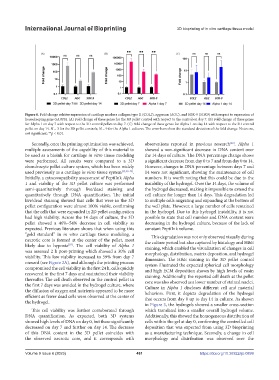
            Figure 6. Fold change relative expression of cartilage markers collagen type II (COL2), aggrecan (AGC), and SOX-9 (SOX9) with respect to expression of
            housekeeping gene GADPH. (A) Fold change of these genes for the 3D pellet control with respect to the control on day 7. (B) Fold change of these genes
            for Alpha 1 on day 7 with respect to the 3D control pellet on day 7. (C) Fold change of these genes for Alpha 1 on day 14 with respect to the 3D control
            pellet on day 14. N = 3 for the 3D pellet controls; N = 9 for the Alpha 1 cultures. The error bars show the standard deviation of the fold change. Notes: ns,
            not significant; **p < 0.01.
               Secondly, once the printing optimization was achieved,   observations reported in previous research .  Alpha  1
                                                                                                   [40]
            multiple assessments of the capability of this material to   showed a non-significant decrease in DNA content over
            be used as a bioink for cartilage in vitro tissue modeling   the 14 days of culture. The DNA percentage change shows
            were  performed. All  results  were  compared  to  a 3D   a significant decrease from day 0 to 7 and from day 0 to 14.
            chondrocyte pellet culture system, which has been widely   However, changes in DNA percentage between days 7 and
            used previously as a cartilage in vitro tissue system [33,40-43] .   14 were not significant, showing the maintenance of cell
            Initially, a cytocompatibility assessment of PeptiInk Alpha   numbers. It is worth noting that this could be due to the
            1  and viability of the 3D pellet culture was performed   instability of the hydrogel. Over the 14 days, the volume of
            semi-quantitatively through live/dead staining and   the hydrogel decreased, making it impossible to extend the
            quantitatively through DNA quantification. The initial   cell culture for longer than 14 days. This degradation led
            live/dead staining showed that cells that were in the 3D   to multiple cells migrating and expanding at the bottom of
            pellet configuration were almost 100% viable, confirming   the well plate. However, a large number of cells remained
            that the cells that were expanded in 2D pellet configuration   in the hydrogel. Due to this hydrogel instability, it is not
            had high viability. Across the 14 days of culture, the 3D   possible to state that cell number and DNA content were
            pellet showed a  46%–54%  decrease  in  cell  viability  as   decreasing in the hydrogel culture, because of the lack of
            expected. Previous literature shows that when using this   constant PeptiInk volume.
            “gold standard” in  in vitro cartilage tissue modeling, a   This degradation was not only observed visually during
            necrotic core is formed at the center of the pellet, most   the culture period but also captured by histology and H&E
            likely due to hypoxia . The cell viability of  Alpha 1   staining, which enabled the visualization of changes in cell
                              [37]
            was assessed 2 h post-printing which showed a 30% cell   morphology, distribution, matrix deposition, and hydrogel
            viability. This low viability increased to 59% from day 7   dimension. The H&E staining in the 3D pellet control
            onward (see Figure 2A), and although the printing process   system illustrated the expected spherical cell morphology
            compromised the cell viability in the first 24 h, cells quickly   and high ECM deposition shown by high levels of eosin
            recovered in the first 7 days and maintained their viability   staining. Additionally, the reported cell death at the pellet
            thereafter. The cell death observed in the control pellet in   core was also observed as a lower number of stained nuclei.
            the first 7 days was avoided in the hydrogel culture, where   Culture in  Alpha 1 discloses different cell and material
            the diffusion of oxygen and nutrients appeared to be more   behaviors. First, it depicts degradation of the hydrogel
            efficient as fewer dead cells were observed at the center of   that occurs from day 0 up to day 14 in culture. As shown
            the hydrogel.
                                                               in Figure 3, the hydrogels showed a smaller cross-section
               This cell viability was further corroborated through   which translated into a smaller overall hydrogel volume.
            DNA quantification. As expected, both 3D systems   Additionally, this showed the homogeneous distribution of
            showed high levels of DNA on day 0, but these significantly   cells within the gel at day 0, confirming the controlled cell
            decreased on day 7 and further on day 14. The decrease   deposition that was expected from using 3D bioprinting
            of this DNA content in the 3D pellet coincides with   as a manufacturing technique. Secondly, a change in cell
            the observed necrotic core, and it corresponds with   morphology and distribution was observed over the


            Volume 9 Issue 6 (2023)                        461                        https://doi.org/10.36922/ijb.0899

