


Page 563 - IJB-9-6
P. 563
International Journal of Bioprinting                           Osteogenic, antibacterial CpTi-MgOCu implants


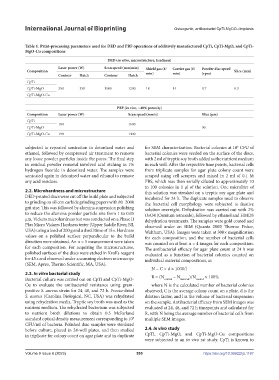
            Table 1. Print-processing parameters used for DED and PBF operations of additively manufactured CpTi, CpTi-MgO, and CpTi-
            MgO-Cu compositions
                                               DED (in vitro, microstructure, hardness)
                          Laser power (W)     Scan speed (mm/min)  Shield gas (ℓ/  Carrier gas (ℓ/  Powder disc speed
             Composition                                       min)        min)        (rpm)         Slice (mm)
                          Contour  Hatch      Contour   Hatch
             CpTi
             CpTi-MgO     350      350        1500      1200   18          14          0.7           0.3
             CpTi-MgO-Cu


                                                   PBF (in vivo, ~40% porosity)
             Composition  Laser power (W)               Scan speed (mm/s)              Slice (μm)
             CpTi
                          180                           1600
             CpTi-MgO                                                                  30
             CpTi-MgO-Cu  198                           1440

            subjected to repeated sonication in deionized water and   for SEM characterization. Bacterial colonies at 10  CFU of
                                                                                                      6
            ethanol, followed by compressed air treatment to remove   bacterial colonies were seeded on the surface of the discs,
            any loose powder particles inside the pores. The final step   with 2 ml of tryptic soy broth added as the nutrient medium
            in residual powder removal involved acid etching in 1%   in each well. After the respective time points, bacterial cells
            hydrogen  fluoride  in  deionized  water.  The  samples  were   from triplicate samples for agar plate colony count were
            sonicated again in deionized water and ethanol to remove   scraped using cell scrapers and mixed in 2 ml of 0.1 M
            any acid residues.                                 PBS, which was then serially diluted to approximately 10
                                                               to 100 colonies in 1 µl of the solution. One microliter of
            2.2. Microhardness and microstructure              this solution was streaked on a tryptic soy agar plate and
            DED-printed discs were cut off the build plate and subjected   incubated for 24 h. The duplicate samples used to observe
            to grinding on silicon carbide grinding papers with 80–2000   the bacterial cell morphology were subjected to fixative
            grit size. This was followed by alumina suspension polishing   solution overnight. Dehydration was carried out with 2%
            to reduce the alumina powder particle size from 1 to 0.05   OsO4 (Osmium tetroxide), followed by ethanol and HMDS
            µm. Vickers microhardness test was conducted on a Phase II   dehydration treatments. The samples were gold coated and
            Plus Micro Vickers Hardness tester (Upper Saddle River, NJ,   observed under an SEM (Quanta 200F, Thermo Fisher,
            USA) using a load of 200 g and a dwell time of 15 s. Hardness   Waltham, USA). Images were taken at 300× magnification
            values on a polished surface perpendicular to the build   for each composition, and the number of bacterial cells
            direction were obtained. An n = 5 measurement were taken   was counted on at least n = 4 images for each composition.
            for each composition. For acquiring the microstructures,   The antibacterial efficacy for agar plate count at 24 h was
            polished surfaces of the discs were etched in Kroll’s reagent   evaluated as a function of bacterial colonies counted on
            for 45 s and observed under a scanning electron microscope   individual material compositions, as
            (SEM; Apreo, Thermo Scientific, MA, USA).
                                                                  N = C × d × 1000/l
            2.3. In vitro bacterial study
            Bacterial culture was carried out on CpTi and CpTi-MgO-  R = (N control  − N material )/N control  × 100%
            Cu to evaluate the antibacterial resistance using gram-  where N is the calculated number of bacterial colonies
            positive S. aureus strain for 24, 48, and 72 h. Freeze-dried   observed, C is the average colony count on a plate, d is the
            S. aureus (Carolina Biological, NC, USA) was rehydrated   dilution factor, and l is the volume of bacterial suspension
            using rehydration media. Tryptic soy broth was used as the   on the sample. Antibacterial efficacy from SEM images was
            nutrient medium. The rehydrated bacterium was subjected   evaluated at 24, 48, and 72 h timepoints and calculated for
            to  nutrient  broth  dilutions  to  obtain  0.5  McFarland   R, with N being the average number of bacterial cells from
            standard optical density measurement corresponding to 10 8   multiple SEM images.
            CFU/ml of bacteria. Polished disc samples were sterilized
            before culture, placed in 24-well plates, and then studied   2.4. In vivo study
            in triplicate for colony count on agar plate and in duplicate   CpTi,  CpTi-MgO,  and CpTi-MgO-Cu  compositions
                                                               were subjected to an in vivo rat study. CpTi is known to


            Volume 9 Issue 6 (2023)                        555                          https://doi.org/10.36922/ijb.1167

