


Page 75 - IJB-9-6
P. 75
International Journal of Bioprinting                              3D Aerosol Jet® printing for microstructuring


                            a                                  b


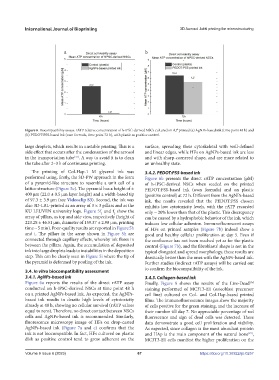
            Figure 6. Biocompatibility assays. rATP relative concentration of h-iPSC-derived NSCs cultured on AJ® printed (a) AgNPs-based ink (time point 48 h) and
            (b) PEDOT:PSS-based ink (own formula, time point 72 h), with plastic as positive control.

            large droplets, which results in unstable printing. This is a   surface, spreading their cytoskeletal with well-defined
            side effect that occurs after the condensation of the aerosol   and linear edges, while HFs on AgNPs-based ink are less
                                 [33]
            in the transportation tube . A way to avoid it is to clean   and with sharp-cornered shape, and are more related to
            the tube after 2–3 h of continuous printing.       an unhealthy state.
               The printing of Col-Hap-1 M glycerol ink was    3.4.2. PEDOT:PSS-based ink
            performed using, firstly, the 3D-PW approach in the form   Figure 6b presents the direct rATP concentration (µM)
            of a pyramid-like structure to resemble a unit cell of a   of  h-iPSC-derived  NSCs  when  seeded  on  the  printed
            lattice structure (Figure 5e). The pyramid has a height of ±   PEDOT:PSS-based ink (own formula) and on plastic
            400 µm (22.0 ± 0.5 µm layer height) and a width-based tip   (positive control) at 72 h. Different from the AgNPs-based
            of 97.3 ± 3.9 µm (see Videoclip S3). Second, the ink was   ink, the results revealed that the PEDOT:PSS chosen
            also 3D-LBL-printed as an array of 3 × 3 pillars and as the   exhibits low cytotoxicity levels, with the rATP recorded
            KU LEUVEN university logo. Figure 5f  and f  show the   only ~ 20% lower than that of the plastic. This discrepancy
                                                  2
                                            1
            array of pillars, as top and side view, respectively (height of   can be caused by a hydrophobic behavior of the ink, which
            223.28 ± 46.51 µm, diameter of 159.37 ± 2.98 µm, printing   induces low cellular adhesion. Immunofluorescent assays
            time ~ 5 min). Poor-quality results are reported in Figure 5h    of HFs on printed samples (Figure 7b) indeed show a
            and  i. The pillars in the array shown in  Figure 5h are   good and healthy cellular proliferation at day 5. Even if
            connected through capillary effects, whereby ink flows in   the confluence has not been reached yet as for the plastic
            between the pillars. Again, the accumulation of deposited   control (Figure 7b), and the fibroblasts’ shape is not in the
            ink into large droplets leads to instabilities in the deposition   typical elongated and spread morphology, these results are
            step. This can be clearly seen in Figure 5i where the tip of   drastically better than the ones with the AgNPs-based ink.
            the pyramid is deformed by pooling of the ink.     Further studies (indirect rATP assays) will be carried out
                                                               to confirm the biocompatibility of the ink.
            3.4. In vitro biocompatibility assessment
            3.4.1. AgNPs-based ink                             3.4.3. Collagen-based ink
            Figure 6a  reports the results of the direct  rATP assay   Finally,  Figure 8 shows the results of the Live-Dead
                                                                                                            TM
            conducted on h-iPSC-derived NSCs at time point 48 h   staining performed of MC3T3-E1 (osteoblast precursor
            on a printed AgNPs-based ink. As expected, the AgNPs-  cell  line)  cultured  on  Col-  and  Col-Hap-based  printed
            based ink results in drastic high levels of cytotoxicity   films. The immunofluorescence images show the majority
            already at 48 h, showing no cellular survival (rATP values   of cells positive for the green staining, and the increase of
            equal to zero). Therefore, no direct contact between NSCs   their number till day 7. No appreciable percentage of red
            cells  and AgNPs-based  ink  is recommended.  Similarly,   fluorescence and sign of dead cells was detected. These
            fluorescence  microscopy  image of  HFs on  drop-casted   data demonstrate a good cell proliferation and viability.
            AgNPs-based ink (Figure 7a and  c) confirms that the   As expected, since collagen is the most abundant protein
            ink is not biocompatible. In fact, HFs cultured on plastic   and HAp is the main component of the natural bone ,
                                                                                                           [49]
            dish  as  positive  control  tend  to  grow  adherent  on  the   MC3T3-E1 cells manifest the higher proliferation on the

            Volume 9 Issue 6 (2023)                         67                        https://doi.org/10.36922/ijb.0257

