


Page 76 - IJB-9-6
P. 76
International Journal of Bioprinting                              3D Aerosol Jet® printing for microstructuring


               a   AgNPs-based ink            b   PEDOT:PSS-based ink        c   Plastic (control)


                                         10 µm                         10 µm                          10 µm

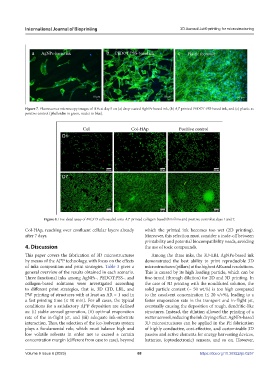
            Figure 7. Fluorescence microscopy images of HFs at day 5 on (a) drop-casted AgNPs-based ink, (b) AJ® printed PEDOT:PSS-based ink, and (c) plastic as
            positive control (phalloidin in green, nuclei in blue).

                                    Col                  Col-HAp             Positive control
                            D1


                            D7


                    Figure 8. Live-dead assay of MC3T3 cells seeded onto AJ®-printed collagen-based thin films and positive control at days 1 and 7.
            Col-HAp, reaching over confluent cellular layers already   which  the  printed  ink  becomes too wet  (2D  printing).
            after 7 days.                                      Moreover, this selection must consider a trade-off between
                                                               printability and potential biocompatibility needs, avoiding
            4. Discussion                                      the use of toxic compounds.
            This paper covers the fabrication of 3D microstructures   Among the three inks, the 3D-LBL AgNPs-based ink
            by means of the AJ®P technology, with focus on the effects   demonstrated the best ability to print reproducible 3D
            of inks composition and print strategies. Table 3 gives a   microstructures (pillars) at the highest ARs and resolutions.
            general overview of the results obtained in each scenario.   This is caused by its high loading particle, which can be
            Three functional inks among AgNPs-, PEDOT:PSS-, and   fine-tuned (through dilution) for 2D and 3D printing. In
            collagen-based solutions were  investigated according   the case of 3D printing with the nondiluted solution, the
            to  different  print  strategies,  that  is,  3D  CJD,  LBL,  and   solid particle content (~ 50 wt.%) is too high compared
            PW printing of structures with at least an AR = 1 and in   to the cosolvent concentration (≤ 20 v/v%), leading to a
            a fast printing time (≤ 10 min). For all cases, the typical   faster evaporation rate in the transport and in-flight jet,
            conditions for a satisfactory AJ®P deposition are defined   eventually causing the deposition of rough, dendritic-like
            as: (i) stable aerosol generation, (ii) optimal evaporation   structures. Instead, the dilution allowed the printing of a
            rate of the in-flight jet, and (iii) adequate ink-substrate   wetter aerosol, reducing the ink drying effect. AgNPs-based
            interaction. Thus, the selection of the (co-)solvents system   3D microstructures can be applied in the PE fabrication
            plays a fundamental role, which must balance high and   of highly conductive, cost-effective, and customizable 3D
            low volatile solvents  in order not  to exceed a certain   passive and active elements for energy harvesting devices,
            concentration margin (different from case to case), beyond   batteries, (optoelectronic)  sensors, and  so on.  However,

            Volume 9 Issue 6 (2023)                         68                        https://doi.org/10.36922/ijb.0257

