


Page 148 - IJOCTA-15-1
P. 148
N. Tekbıyık-Ersoy / IJOCTA, Vol.15, No.1, pp.137-154 (2025)


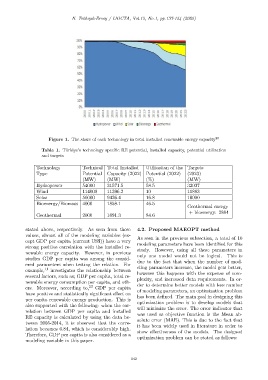
                       Figure 1. The share of each technology in total installed renewable energy capacity 20

                    Table 1. T¨urkiye’s technology specific RE potential, installed capacity, potential utilization
                    and targets

                 Technology           Technical Total Installed   Utilization of the Targets
                 Type                 Potential  Capacity (2022) Potential (2022)   (2023)
                                      (MW)       (MW)             (%)               (MW)
                 Hydropower           54000      31571.5          58.5              32037
                 Wind                 114000     11396.2          10                11883
                 Solar                56000      9426.4           16.8              10000
                 Bioenergy/Biomass 4000          1858.1           46.5
                                                                                    Geothermal energy
                                                                                     + bioenergy: 2884
                 Geothermal           2000       1691.3           84.6


            stated above, respectively. As seen from these    4.2. Proposed MAEOPT method
            values, almost all of the modeling variables (ex-  As seen in the previous subsection, a total of 10
            cept GDP per capita (current US$)) have a very
                                                              modeling parameters have been identified for this
            strong positive correlation with the installed re-
                                                              study. However, using all these parameters in
            newable energy capacity. However, in previous
                                                              only one model would not be logical.    This is
            studies GDP per capita was among the consid-
                                                              due to the fact that when the number of mod-
            ered parameters when testing the relation. For    eling parameters increase, the model gets better,
            example, 11  investigates the relationship between
                                                              however this happens with the expense of com-
            several factors, such as; GDP per capita, total re-
                                                              plexity, and increased data requirements. In or-
            newable energy consumption per capita, and oth-   der to determine better models with less number
            ers. Moreover, according to, 23  GDP per capita
            have positive and statistically significant effect on  of modeling parameters, an optimization problem
                                                              has been defined. The main goal in designing this
            per capita renewable energy production. This is
                                                              optimization problem is to develop models that
            also supported with the following: when the cor-
                                                              will minimize the error. The error indicator that
            relation between GDP per capita and installed
                                                              was used as objective function is the Mean ab-
            RE capacity is calculated by using the data be-
                                                              solute error (MAE). This is due to the fact that
            tween 2005-2014, it is observed that the corre-
                                                              it has been widely used in literature in order to
            lation becomes 0.84, which is considerably high.
                                                              show effectiveness of the models. The designed
            Therefore, GDP per capita is also considered as a
                                                              optimization problem can be stated as follows:
            modeling variable in this paper.
                                                           142

