


Page 150 - IJOCTA-15-1
P. 150
N. Tekbıyık-Ersoy / IJOCTA, Vol.15, No.1, pp.137-154 (2025)
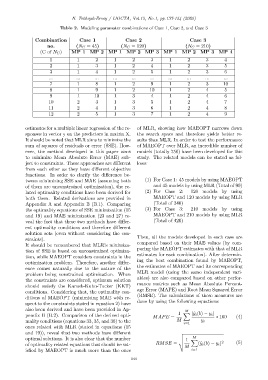
                            Table 2. Modeling paramater combinations of Case 1, Case 2, and Case 3


                 Combination        Case 1               Case 2                      Case 3
                      no.          (N C = 45)          (N C = 120)                 (N C = 210)
                   (C of N C )   MP 1 MP 2 MP 1 MP 2 MP 3 MP 1 MP 2 MP 3 MP 4
                       1           1       2        1       2       3       1       2        3       4
                       2           1       3        1       2       4       1       2        3       5
                       3           1       4        1       2       5       1       2        3       6
                       ...         ...     ...     ...     ...      ...     ...     ...     ...     ...
                       7           1       8        1       2       9       1       2        3      10
                       8           1       9        1       2      10       1       2        4       5
                       9           1       10       1       3       4       1       2        4       6
                       10          2       3        1       3       5       1       2        4       7
                       11          2       4        1       3       6       1       2        4       8
                       12          2       5        1       3       7       1       2        4       9


            estimates for a multiple linear regression of the re-  of MLR, showing how MAEOPT narrows down
            sponses in vector y on the predictors in matrix X.  the search space and therefore yields better re-
            It should be noted that MLR aims to minimize the  sults than MLR. In order to test the performance
            sum of squares of residuals or error (SSE). How-  of MAEOPT over MLR, an incredible number of
            ever, the method developed in this paper aims     models (totally 750) have been developed for this
            to minimize Mean Absolute Error (MAE) sub-        study. The related models can be stated as fol-
            ject to constraints. These approaches are different  lows:
            from each other as they have different objective
            functions. In order to clarify the difference be-
            tween minimizing SSE and MAE (assuming both          (1) For Case 1: 45 models by using MAEOPT
            of them are unconstrained optimization), the re-         and 45 models by using MLR (Total of 90)
            lated optimality conditions have been derived for    (2) For Case 2:      120 models by using
            both them. Related derivations are provided in           MAEOPT and 120 models by using MLR
            Appendix A and Appendix B (B.1). Comparing               (Total of 240)
            the optimality equations of SSE minimization (15     (3) For Case 3:      210 models by using
            and 19) and MAE minimization (23 and 27) re-             MAEOPT and 210 models by using MLR
            veal the fact that these two methods have differ-        (Total of 420)
            ent optimality conditions and therefore different
            solution sets (even without considering the con-
                                                              Then, all the models developed in each case are
            straints).
                                                              compared based on their MAE values (by com-
            It should be remembered that MLR’s minimiza-
                                                              paring the MAEOPT estimates with that of MLR
            tion of SSE is based on unconstrained optimiza-
                                                              estimates for each combination). After determin-
            tion, while MAEOPT considers constraints in the
                                                              ing the best combination found by MAEOPT,
            optimization problem. Therefore, another differ-
            ence comes naturally due to the nature of the     the estimates of MAEOPT and its corresponding
            problem being constrained optimization. When      MLR model (using the same independent vari-
            the constraints are considered, optimum solution  ables) are also compared based on other perfor-
            should satisfy the Karush-Kuhn-Tucker (KKT)       mance metrics such as Mean Absolute Percent-
            conditions. Considering that, the optimality con-  age Error (MAPE) and Root Mean Squared Error
            ditions of MAEOPT (minimizing MAE with re-        (RMSE). The calculations of these measures are
            spect to the constraints stated in equation 2) have  done by using the following equations:
            also been derived and have been provided in Ap-                        M
                                                                                1  X  |ˆy i (b) − y i |
            pendix B (B.2). Comparison of the derived opti-          MAPE =                      ∗ 100    (4)
            mality conditions (equations 33, 35, and 36) to the                M   i=1    y i
            ones related with MLR (stated in equations (15
            and 19)), reveal that two methods have different                    v
                                                                                       M
            optimal solutions. It is also clear that the number                 u   1  X
                                                                                u
            of optimality related equations that should be sat-       RMSE =    t        (ˆy i (b) − y i ) 2  (5)
                                                                                   M
            isfied by MAEOPT is much more than the ones                               i=1
                                                           144

