


Page 179 - IJOCTA-15-1
P. 179
Recent metaheuristics on control parameter determination


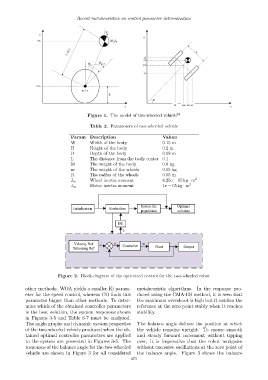
                                        Figure 1. The model of two-wheeled vehicle 38
                                         Table 2. Parameters of two-wheeled vehicle


                                 Param Description                       Values
                                 W       Width of the body               0.15 m
                                 H       Height of the body              0.2 m
                                 D       Depth of the body               0.08 m
                                 L       The distance from the body center 0.1
                                 M       The weight of the body          0.8 kg
                                 m       The weight of the wheels        0.05 kg
                                 R       The radius of the wheels        0.05 m
                                         Wheel inertia moment            6.25e − 05 kg · m 2
                                 J w
                                         Motor inertia moment            1e − 05 kg · m 2
                                 J m


                           Figure 2. Block-diagram of the optimized control for the two-wheeled robot

            other methods. WOA yields a smaller Ki param-     metaheuristic algorithms. In the response pro-
            eter for the speed control, whereas CO finds this  duced using the CMA-ES method, it is seen that
            parameter bigger than other methods. To deter-    the maximum overshoot is high but it catches the
            mine which of the obtained controller parameters  reference at the zero point stably when it reaches
            is the best solution, the system responses shown  stability.
            in Figures 3-5 and Table 6-7 must be analyzed.
            The angle graphs and dynamic system properties    The balance angle defines the position at which
            of the two-wheeled vehicle produced when the ob-  the vehicle remains upright. To ensure smooth
            tained optimal controller parameters are applied  and steady forward movement without tipping
            to the system are presented in Figures 3-5. The   over, it is imperative that the robot navigates
            responses of the balance angle for the two-wheeled  without excessive oscillations at the zero point of
            vehicle are shown in Figure 3 for all considered  the balance angle. Figure 3 shows the balance
                                                           173

