


Page 162 - IJOCTA-15-2
P. 162
A modified graphical based tuning and performance analysis of second order LADRC . . .


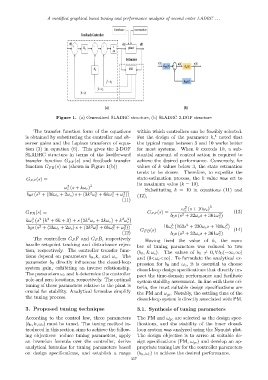
                          Figure 1. (a) Generalized SLADRC structure, (b) SLADRC 2-DOF structure


                The transfer function form of the equations   within which controllers can be feasibly selected.
                                                                                                4
            is obtained by substituting the controller and ob-  For the design of the parameter k, noted that
            server gains and the Laplace transform of equa-   the typical range between 3 and 10 works better
            tion (3) in equation (6). This gives the 2-DOF    for most systems. When k exceeds 10, a sub-
            SLADRC structure in terms of the feedforward      stantial amount of control action is required to
            transfer function G FF (s) and feedback transfer  achieve the desired performance. Conversely, for
            function G FB (s) as (shown in Figure 1(b))       values of k values below 3, the state estimation
                                                              tends to be slower. Therefore, to expedite the
             G FF (s) =                                       state-estimation process, the k value was set to
                                                              its maximum value (k = 10).
                               2
                             ω (s + kω c ) 3                      Substituting k = 10 in equations (11) and
                               c
                                                        2
                  2
                                         2 2
                                                   2
             b 0 s (s + (3kω c + 2ω c ) s + (3k ω + 6kω + ω ))  (12),
                                                        c
                                           c
                                                   c
                                                       (11)
                                                                                   2
                                                                                  ω (s + 10ω c ) 3
                                                                                   c
            G FB (s) =                                            G FF (s) =                             (13)
                                                                                  2
                                                                                                  2
                                                                             b 0 s (s + 32ω c s + 361ω )
                                                                                                  c

                                        2

                                                       2 2

                      2
             kω 3  s 2  k + 6k + 3 + s 2k ω c + 3kω c + k ω
               c                                          c
                                                                                    2
                                                   2
                  2
                                                        2
                                         2 2
             b 0 s (s + (3kω c + 2ω c ) s + (3k ω + 6kω + ω ))  G FB (s) =  10ω 3 c  163s + 230ω c s + 100ω c 2  (14)
                                                   c
                                                        c
                                            c
                                                                                  2
                                                       (12)                  b 0 s (s + 32ω c s + 361ω )
                                                                                                  2
                                                                                                  c
                The controllers G F F and G F B, respectively
                                                                  Having fixed the value of k, the num-
            handle set-point tracking and disturbance rejec-
                                                              ber of tuning parameters was reduced to two
            tion, respectively. The controller transfer func-  (b 0 , & ω c ). The values of b 0 ̸= 0, ∀ b 0 (−∞, ∞)
            tions depend on parameters b 0 , k, and ω c . The  and (0<ω c <∞). To formulate the analytical ex-
            parameter b 0 directly influences the closed-loop  pression for b 0 and ω c , it is essential to choose
            system gain, exhibiting an inverse relationship.  closed-loop design specifications that directly im-
            The parameters ω c and k determine the controller  pact the time-domain performance and facilitate
            pole and zero locations, respectively. The optimal  system stability assessment. In line with these cri-
            tuning of these parameters relative to the plant is  teria, the most suitable design specifications are
            crucial for stability. Analytical formulae simplify  the PM and ω gc . Notably, the settling time of the
            the tuning process.                               closed-loop system is directly associated with PM.
            3. Proposed tuning technique                      3.1. Synthesis of tuning parameters
            According to the control law, three parameters    The PM and ω gc are selected as the design spec-
            (b 0 , k, ω c ) must be tuned. The tuning method in-  ifications, and the stability of the inner closed-
            troduced in this section aims to achieve the follow-  loop system was analyzed using the Nyquist plot.
            ing objectives: reduce tuning parameters, apply   The design objective is to arrive at suitable de-
            an inversion formula over the controller, derive  sign specifications (PM, ω gc ) and develop an ap-
            analytical formulas for tuning parameters based   propriate tuning law for the controller parameters
            on design specifications, and establish a range   (b 0 , ω c ) to achieve the desired performance.
                                                           357

