


Page 164 - IJOCTA-15-2
P. 164
A modified graphical based tuning and performance analysis of second order LADRC . . .


                x 2 = (1.1057ω tan (φ c )
                                                      !
                      r

                                           2
                +0.5ω     (−2.2114 tan (φ c )) + 6.2524
                Solving equations (24) and (25) for ω c af-
            ter applying the condition given in equation (23)
            yields,

              (1.1057 tan (φ c )

                   r                             2

                                      2
              − 0.5    −2.2114tan (φ c ) + 6.2524  > 0.268
                                                       (26)
                The admissible range for the phase of the con-
            troller (φ c ) with respect to ω c using Equation (26)
            (Wolfram Mathematica) becomes:


                                           π         π
            φ c ϵ  (−π, −0.7306π] ∪ −             ∪    , π
                                       2, 0.2694π     2
                                                       (27)
                Similarly, with respect to b 0 using equation
            (21) we get,
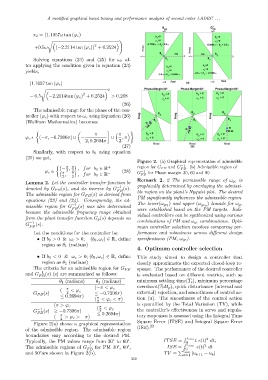
                                                              Figure 2. (a) Graphical representation of admissible
                             π π               +                               −1
                            − ,    , for b 0 ∈ R              region for G F B and G F B . (b) Admissible region of
                     φ c ∈   π  2  π 2          −     (28)   G −1  for Phase margin 30, 60 and 90
                             2  , −  2  , for b 0 ∈ R           F B
                                                              Remark 2. 2 The permissible range of ω gc is
            Lemma 2. Let the controller transfer function be
            denoted by G FB (s), and its inverse by G −1  (s).  graphically determined by overlaying the admissi-
                                                     FB       ble region on the plant’s Nyquist plot. The desired
            The admissible region for G FB (s) is derived from
                                                              PM significantly influences the admissible region.
            equations (23) and (24). Consequently, the ad-
            missible region for G −1  (s) was also determined  The lower(ω gc l  ) and upper (ω gc u  ) bounds for ω gc
                                 FB                           were established based on the PM targets. Indi-
            because the admissible frequency range obtained
                                                              vidual controllers can be synthesized using various
            from the plant transfer function G p (s) depends on  combinations of PM and ω gc combinations. Opti-
            G −1  (s).
              FB                                              mum controller selection involves comparing per-
                Let the conditions for the controller be:     formance and robustness across different design
                  • If b 0 > 0 & ω c > 0;  (b 0 , ω c ) ∈ R, define  specifications (PM, ω gc ).
                    region as θ 1 (radians)
                                                              4. Optimum controller selection
                  • If b 0 < 0 & ω c > 0; (b 0 , ω c ) ∈ R, define  This study aimed to design a controller that
                    region as θ 2 (radians)                   closely approximates the expected closed-loop re-
                The criteria for an admissible region for G FB  sponse. The performance of the desired controller
            and G −1  (s) (s) are summarized as follows:      is evaluated based on different metrics, such as
                  FB
                           θ 1 (radians)    θ 2 (radians)     minimum settling time(T s ), minimum percentage
                                                              overshoot(%M p ), quick disturbance (internal and
                               π           (−π < φ c
                            (− < φ c
                G FB (s)       2           ≤ −0.7306π)        external) rejection, and smoothness of control ac-
                            ≤ 0.2694π)      π
                                           ( < φ c < π)       tion (u). The smoothness of the control action
                                            2
                                                              is quantified by the Total Variation (TV), while
                         (π > φ c            π
                G −1  (s) ≥ −0.7306π)       ( < φ c           the controller’s effectiveness in servo and regula-
                                             2
                  FB                        ≤ 0.2694π)
                            π
                         (− > φ c > −π)                       tory responses is assessed using the Integral Time
                            2
                Figure 2(a) shows a graphical representation  Square Error (ITSE) and Integral Square Error
                                                              (ISE). 22
            of the admissible region. The admissible region
            boundaries vary according to the desired PM.
                                                                                   R  t sim  2
            Typically, the PM values range from 30° to 60°.               ITSE =    0 R  t e(t) dt;
                                                                                            2
            The admissible regions of G −1  for PM 30°, 60°,               ISE =    t sim  e(t) dt
                                        FB                                         0
                                                                                P t sim
            and 90°are shown in Figure 2(b).                              TV =        |u k+1 − u k |
                                                                                  k=1
                                                           359

