


Page 33 - IJOCTA-15-3
P. 33
Using infinitesimal symmetries for determining the first Maxwell time of geometric control problem on SH(2)
            and 5th order. This method solves the differential  us to identify the Maxwell points and, conse-
            equations governing the system while adjusting    quently, compute the first Maxwell time corre-
            the time step based on the required precision.    sponding to these symmetries, which, in turn, en-
            This approach was chosen for its robustness and   abled us to study the loss of optimality along a
            efficiency in handling complex nonlinear systems.  geodesic.
            Using this method, we were able to obtain the         The methods used in this study could
            trajectories and detect the moments when the      be particularly useful for analyzing other sub-
            trajectories come sufficiently close, thus identify-  Riemannian problems associated with a solv-
            ing the Maxwell times.                            able Lie group.   If the group is not solvable,
                                                              one can proceed using the nilpotent approxi-
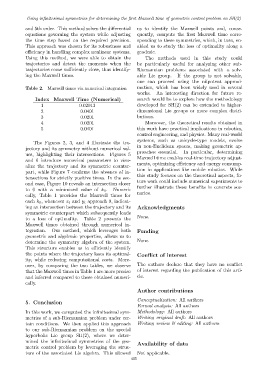
            Table 2. Maxwell times via numerical integration  mation, which has been widely used in several
                                                              works.  An interesting direction for future re-
                 Index Maxwell Time (Numerical)               search would be to explore how the methodology
                   1                0.02013                   developed for SH(2) can be extended to higher-
                   2                 0.0401                   dimensional Lie groups or more complex distri-
                   3                 0.0201                   butions.
                   4                 0.0201                       Moreover, the theoretical results obtained in
                   5                 0.0401                   this work have practical implications in robotics,
                                                              control engineering, and physics. Many real-world
                                                              systems, such as unicycle-type models, evolve
                The Figures 2, 3, and 4 illustrate the tra-
            jectory and its symmetry without numerical val-   in non-Euclidean spaces, making geometric ap-
                                                              proaches essential.  In particular, determining
            ues, highlighting their intersections. Figures 5
                                                              Maxwell time enables real-time trajectory adjust-
            and 6 introduce numerical parameters to visu-
                                                              ments, optimizing efficiency and energy consump-
            alize the trajectory and its symmetric counter-
                                                              tion in applications like mobile robotics. While
            part, while Figure 7 confirms the absence of in-
                                                              this study focuses on the theoretical aspects, fu-
            tersections for strictly positive times. In the sec-
                                                              ture work could include numerical experiments to
            ond case, Figure 10 reveals an intersection closer
                                                              further illustrate these benefits in concrete sce-
            to 0 with a minimized value of k 0 .   Numeri-
                                                              narios.
            cally, Table 1 provides the Maxwell times for
            each k 0 , whenever x t and y t approach 0, indicat-
            ing an intersection between the trajectory and its  Acknowledgments
            symmetric counterpart which subsequently leads
                                                              None.
            to a loss of optimality.  Table 2 presents the
            Maxwell times obtained through numerical in-
            tegration.  Our method, which leverages both      Funding
            geometric and algebraic properties, allows us to
            determine the symmetry algebra of the system.     None.
            This structure enables us to efficiently identify
            the points where the trajectory loses its optimal-  Conflict of interest
            ity, while reducing computational costs. More-
            over, by comparing the two tables, we observe     The authors declare that they have no conflict
            that the Maxwell times in Table 1 are more precise  of interest regarding the publication of this arti-
            and inferred compared to those obtained numeri-   cle.
            cally.
                                                              Author contributions
                                                              Conceptualization: All authors
            5. Conclusion
                                                              Formal analysis: All authors
            In this work, we computed the infinitesimal sym-  Methodology: All authors
            metries of a sub-Riemannian problem under cer-    Writing–original draft: All authors
            tain conditions. We then applied this approach    Writing–review & editing: All authors
            to our sub-Riemannian problem on the special
            hyperbolic Lie group SH(2), where we deter-
            mined the infinitesimal symmetries of the geo-
                                                              Availability of data
            metric control problem by leveraging the struc-
            ture of the associated Lie algebra. This allowed  Not applicable.
                                                           405

