


Page 101 - IJOCTA-15-4
P. 101
Advanced frequency control strategy for power systems with high renewable energy penetration


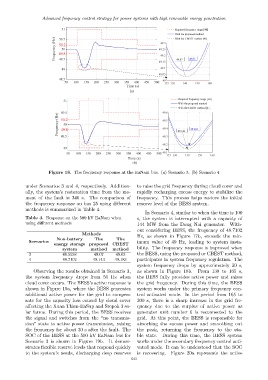
                       Figure 18. The frequency response at the EaNam bus. (a) Scenario 3. (b) Scenario 4


            under Scenarios 3 and 4, respectively. Addition-  to raise the grid frequency during cloud cover and
            ally, the system’s restoration time from the mo-  rapidly recharging excess energy to stabilize the
            ment of the fault is 340 s. The comparison of     frequency. This process helps restore the initial
            the frequency response on bus 25 using different  reserve level of the BESS system.
            methods is summarized in Table 4.
                                                                  In Scenario 4, similar to when the time is 100
            Table 4. Response on the 500 kV EaNam when        s, the system is interrupted with a capacity of
            using different methods                           144 MW from the Dong Nai generator. With-
                                                              out considering BESS, the frequency of 48.7102
                                     Methods
                                                              Hz, as shown in Figure 17b, exceeds the min-
                          Non-battery      The       The
              Scenarios                                       imum value of 49 Hz, leading to system insta-
                         energy storage proposed CBEST
                             system      method    method     bility. The frequency response is improved when
              3              48.5538       49.07    49.03     the BESS, using the proposed or CBEST method,
              4              48.7102      49.143    49.183    participates in system frequency regulation. The
                                                              system frequency drops by approximately 30 s,
                Observing the results obtained in Scenario 3,  as shown in Figure 18b.   From 130 to 165 s,
            the system frequency drops from 50 Hz when        the BESS fully provides active power and raises
            cloud cover occurs. The BESS’s active response is  the grid frequency. During this time, the BESS
            shown in Figure 19a, where the BESS generates     system works under the primary frequency con-
            additional active power for the grid to compen-   trol activated mode. In the period from 165 to
            sate for the capacity loss caused by cloud cover  300 s, there is a sharp increase in the grid fre-
            affecting the Xuan Thien-EaSup and Srepok 3 so-   quency due to the surplus of active power as
            lar farms. During this period, the BESS receives  generator unit number 6 is reconnected to the
            the signal and switches from the “no transmis-    grid. At this point, the BESS is responsible for
            sion” state to active power transmission, raising  absorbing the excess power and smoothing out
            the frequency for about 30 s after the fault. The  the peak, returning the frequency to the sta-
            SOC of the BESS at the 500 kV EaNam bus for       ble state. During this time, the BESS system
            Scenario 3 is shown in Figure 19b. It demon-      works under the secondary frequency control acti-
            strates flexible reserve levels that respond quickly  vated mode. It can be understood that the SOC
            to the system’s needs, discharging deep reserves  is recovering. Figure 20a represents the active
                                                           643

