


Page 219 - IJOCTA-15-4
P. 219
Data-driven optimization and parameter estimation for an epidemic model


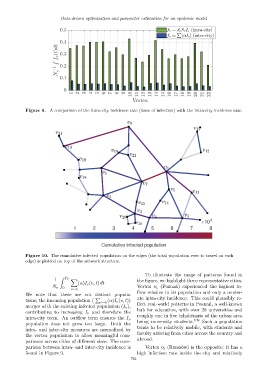
            Figure 9. A comparison of the intra-city incidence rate (force of infection) with the intra-city incidence rate.


            Figure 10. The cumulative infected population on the edges (the total population ever to travel on each
            edge) is plotted on top of the network structure.


                                                                  To illustrate the range of patterns found in
                         1  Z  T F X                          the figure, we highlight three representative cities.
                                    (α)I e (v, t) dt
                        N v  0   e∼v                          Vertex v 1 (Pozna´n) experienced the highest in-
            We note that these are not distinct popula-       flow relative to its population and only a moder-
                                           P                  ate intra-city incidence. This could plausibly re-
            tions; the incoming population (  e∼v (α)I e (v, t))
            merges with the existing infected population (I v ),  flect real-world patterns in Pozna´n, a well-known
            contributing to increasing I v and therefore the  hub for education, with over 20 universities and
                                                              roughly one in five inhabitants of the urban area
            intra-city term. An outflow term ensures the I v                           109
                                                              being university students.   Such a population
            population does not grow too large. Both the
                                                              tends to be relatively mobile, with students and
            intra- and inter-city measures are normalized by
                                                              faculty arriving from cities across the country and
            the vertex population to allow meaningful com-
                                                              abroad.
            parisons across cities of different sizes. The com-
            parison between intra- and inter-city incidence is    Vertex v 5 (Rzesz´ow) is the opposite: it has a
            found in Figure 9.                                high infection rate inside the city and relatively
                                                           761

