Page 78 - IJOCTA-15-4
P. 78

B. Shiri et.al. / IJOCTA, Vol.15, No.4, pp.610-624 (2025)
                                                              we can compute the derivative with respect to α i ,
                        3.5
                                                              yielding
                         3
                                                                 ∂
                        2.5                                            −(1−⃗α)
                                                                     O       x i (t − 1)
                                                                ∂α k
                         2
                       x 1 (t)                                            t−1       t−s−1 t−s−1
                        1.5                                              X      1    X     Y
                                                                    = δ ki                     (j − α i )x i (s).
                         1                                                   (t − s)!
                                                                         s=0         r=0   j=0
                        0.5                                                                j̸=r
                                                                                                         (64)
                         0
                         0   5   10  15  20   25  30  35
                                                              Therefore, the rate of change of x i with respect
                                        t
                                                              to α i can be calculated recursively by
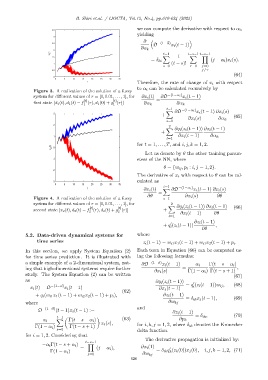
                Figure 3. A realization of the solution of a fuzzy
                system for different values of r = [0, 0.01, . . . , 1], for  ∂x i (t)  ∂O −(1−α i ) x i (t − 1)
                                      [t]          [t]                =
                first state [d 1 (t), d 1 (t) − f (r), d 1 (0) + g (r)]
                                      1            1             ∂α k          ∂α k
                                                                           t−1    −(1−α i )
                                                                           X   ∂O       x i (t − 1) ∂x i (s)
                         3                                               +
                                                                                     ∂x i (s)     ∂α k   (65)
                                                                           s=1
                         2                                                  2
                                                                           X   ∂q i (z i (t − 1)) ∂x l (t − 1)
                                                                         +
                         1                                                      ∂x l (t − 1)  ∂α k
                                                                           l=1
                                                              for t = 1, . . . , T, and i, j, k = 1, 2.
                        x 2 (t)  0
                                                                  Let us denote by θ the other training param-
                         -1                                   eters of the NN, where
                                                                          θ = {w ij , p i : i, j = 1, 2}.
                         -2
                                                              The derivative of x i with respect to θ can be cal-
                         -3                                   culated as
                         0   5   10  15  20   25  30  35
                                                                          t−1
                                        t                        ∂x i (t)  X  ∂O −(1−α i ) x i (t − 1) ∂x i (s)
                                                                       =
                                                                   ∂θ              ∂x i (s)      ∂θ
                Figure 4. A realization of the solution of a fuzzy        s=1
                system for different values of r = [0, 0.01, . . . , 1], for  2
                                                                            X   ∂q i (z i (t − 1)) ∂x l (t − 1)
                                         [t]         [t]                                                 (66)
                second state [x 2 (t), d 2 (t) − f (r), d 2 (t) + g (r)]  +
                                         2           2                           ∂x l (t − 1)   ∂θ
                                                                            l=1
                                                                                       ∂z i (t − 1)
                                                                             ′
                                                                          + q (z i (t − 1))      ,
                                                                             i
                                                                                           ∂θ
            5.2. Data-driven dynamical systems for            where
                 time series                                     z i (t − 1) = w i1 x 1 (t − 1) + w i1 x 2 (t − 1) + p i .
            In this section, we apply System Equation (2)     Each term in Equation (66) can be computed us-
            for time series prediction. It is illustrated with  ing the following formulas:
            a simple example of a 2-dimensional system, not-    ∂O −(1−⃗α) x i (t − 1)  α i   Γ(t − s − α i )
            ing that high-dimensional systems require further         ∂x i (s)    =  Γ(1 − α i ) Γ(t − s + 1)  ,
            study. The System Equation (2) can be written                                                (67)
            as                                                        ∂q i (z i (t − 1))  ′
                                                                                       i
              x i (t) = O −(1−⃗α) x i (t − 1)                           ∂x j (t − 1)  = q (z i (t − 1))w ij ,  (68)
                                                       (62)
                 + q i (w i1 x 1 (t − 1) + w i2 x 2 (t − 1) + p i ),     ∂z i (t − 1)
                                                                                    = δ ik x j (t − 1),  (69)
            where                                                           ∂w kj
                  O −(1−⃗α) (t − 1)x i (t − 1) :=             and
                                                                              ∂z i (t − 1)
                                                                                        = δ ik ,         (70)
                          t−1                        (63)
                    α i   X    Γ(t − s − α i )                                   ∂p k
                                              x i (s),
                 Γ(1 − α i )    Γ(t − s + 1)                  for i, k, j = 1, 2, where δ ik denotes the Kronecker
                          s=0                                 delta function.
            for i = 1, 2. Considering that
                                                                  The derivative propagation is initialized by:
                                       t−s−1
                    −α i Γ(t − s + α i )  Y
                                     =      (j − α i ),         ∂x i (1)    ′
                       Γ(1 − α i )                                    = δ ik q (z k (0))x j (0),  i, j, k = 1, 2, (71)
                                                                            k
                                        j=0                     ∂w kj
                                                           620
   73   74   75   76   77   78   79   80   81   82   83