


Page 89 - IJPS-1-1
P. 89
Frank T. Denton and Byron G. Spencer

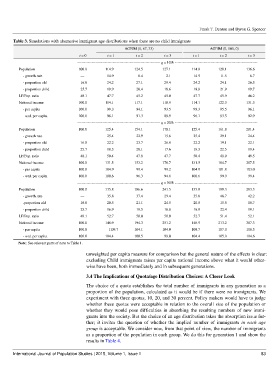
       Table 3. Simulations with alternative immigrant age distributions when there are no child immigrants
                                                      AGEIM (0, 67, 33)                    AGEIM (0, 100, 0)
                                   t = 0       t = 1       t = 2       t = 3       t = 1       t = 2       t = 3
                                  --------------------------------------------------------------- q = 10% ---------------------------------------------------------------
         Population                100.0      114.9       124.5       127.1        114.9      128.1       136.6
           - growth rate           —           14.9         8.4         2.1         14.9       11.5         6.7
           - proportion old        16.8        24.2        27.1        29.4         24.2       24.1        26.5
           - proportion child      25.7        19.9        20.4        18.6         19.9       21.9        19.7
         LF/Pop. ratio             48.1        47.7        45.2        45.0         47.7       45.9        46.2
         National income           100.0      114.1       117.1       118.9        114.1      122.3       131.3
           - per capita            100.0       99.3        94.1        93.5         99.3       95.5        96.1
           - wtd. per capita       100.0       96.1        91.3        89.9         96.1       93.5        92.9
                                  --------------------------------------------------------------- q = 20% ---------------------------------------------------------------
         Population                100.0      125.4       154.1       178.1        125.4      161.8       201.4
           - growth rate           —           25.4        22.9        15.6         25.4       29.1        24.4
           - proportion old        16.8        22.2        23.7        26.8         22.2       19.1        22.1
           - proportion child      25.7        18.3        20.1        17.6         18.3       22.5        19.4
         LF/Pop. ratio             48.1        50.4        47.8        47.7         50.4       48.9        49.5
         National income           100.0      131.5       153.2       176.7        131.5      164.7       207.5
           - per capita            100.0      104.9        99.4        99.2        104.9      101.8       103.0
           - wtd. per capita       100.0      100.6        96.3        94.8        100.6       99.9        99.4
                                  --------------------------------------------------------------- q = 30% ---------------------------------------------------------------
         Population                100.0      135.8       186.6       241.5        135.8      199.3       283.3
           - growth rate           —           35.8        37.4        29.4         35.8       46.7        42.2
           -proportion old         16.8        20.5        21.1        24.5         20.5       15.5        18.7
           - proportion child      25.7        16.9        19.5        16.8         16.9       22.4        19.1
         LF/Pop. ratio             48.1        52.7        50.0        50.0         52.7       51.4        52.1
         National income           100.0      148.9       194.3       251.2        148.9      213.2       307.3
           - per capita            100.0        1O9.7     104.1       104.0        109.7      107.0       108.5
           - wtd. per capita       100.0      104.4       100.5        99.0        104.4      105.0       104.6
         Note: See relevant parts of note to Table 1.

                                      unweighted per capita measure for comparison but the general nature of the effects is clear:
                                      excluding Child immigrants raises per capita national income above what it would other-
                                      wise have been, both immediately and in subsequent generations.
                                      3.4 The Implications of Quota/age Distribution Choices: A Closer Look

                                      The choice of a quota establishes the total number of immigrants in any generation as a
                                      proportion of the population, calculated as it would be if there were no immigrants. We
                                      experiment with three quotas, 10, 20, and 30 percent. Policy makers would have to judge
                                      whether these quotas were acceptable in relation to the overall size of the population or
                                      whether they  would pose difficulties in  absorbing the resulting numbers of new  immi-
                                      grants into the society. But the choice of an age distribution takes the absorption issue fur-
                                      ther; it invites the question of whether the implied  number  of immigrants  in each age
                                      group is acceptable. We consider now, from that point of view, the number of immigrants
                                      as a proportion of the population in each group. We do this for generation 1 and show the
                                      results in Table 4.

       International Journal of Population Studies | 2015, Volume 1, Issue 1                                    83

