


Page 35 - IMO-1-1
P. 35
Innovative Medicines & Omics                                         Antioxidant nanomedicines for therapies


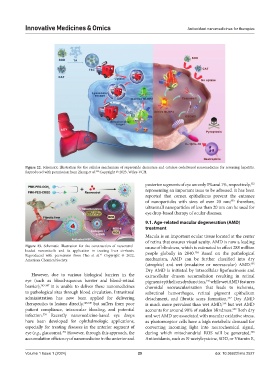
            Figure 22. Schematic illustration for the cellular mechanism of superoxide dismutase and catalase codelivered nanomedicine for reversing hepatitis.
            Reproduced with permission from Zhang et al.  Copyright © 2023, Wiley-VCH.
                                          332
                                                               posterior segments of eye are only 5% and 1%, respectively,
                                                                                                            352
                                                               representing an important issue to be adressed. It has been
                                                               reported that cornea epitheliums prevent the entrance
                                                               of  nanoparticles  with  sizes  of  over  20  nm;  therefore,
                                                                                                   353
                                                               ultrasmall nanoparticles of less than 20 nm can be used for
                                                               eye drop-based therapy of ocular diseases.
                                                               9.1. Age-related macular degeneration (AMD)
                                                               treatment
                                                               Macula is an important ocular tissue located at the center
                                                               of retina that ensures visual acuity. AMD is now a leading
            Figure  23.  Schematic  illustration  for  the  construction  of  resveratrol-  cause of blindness, which is estimated to affect 288 million
            loaded  nanomicelle  and  its  application  in  treating  liver  cirrhosis.   people  globally  in  2040.  Based on the pathological
                                                                                    354
            Reproduced with permission from Hao  et al.  Copyright © 2022,
                                            41
            American Chemical Society.                         mechanism,  AMD  can  be  further  classified  into  dry
                                                               (atrophic)  and  wet  (exudative  or  neovascular)  AMD.
                                                                                                            355
                                                               Dry AMD is initiated by intracellular lipofuscinosis and
              However, due to various biological barriers in the   extracellular drusen accumulation resulting in retinal
            eye  (such  as  blood-aqueous  barrier  and  blood-retinal   pigment epithelium dysfunction,  while wet AMD features
                                                                                         356
            barrier), 345-347  it is unable to deliver these nanomedicines   choroidal  neovascularization  that  leads  to  ischemia,
            to pathological sites through blood circulation. Intravitreal   subretinal  hemorrhages,  retinal pigment epithelium
            administration has now been applied for delivering   detachment,  and  fibrotic  scars  formation.   Dry  AMD
                                                                                                  357
            therapeutics to lesions directly, 348,349  but suffers from poor   is much more prevalent than wet AMD,  but wet AMD
                                                                                                358
            patient compliance, intraocular bleeding, and potential   accounts for around 90% of sudden blindness.  Both dry
                                                                                                    359
                   350
            infection.   Recently  nanomedicine-based  eye  drops   and wet AMD are associated with macular oxidative stress,
            have been developed for ophthalmologic applications,   as photoreceptor cells have a high metabolic demand for
            especially for treating diseases in the anterior segment of   converting incoming light into neurochemical signal,
                            351
            eye (e.g., glaucoma).  However, through this approach, the   during  which  mitochondrial  ROS  will  be  generated.
                                                                                                            360
            accumulation efficiency of nanomedicine in the anterior and   Antioxidants, such as N-acetylcysteine, SOD, or Vitamin E,
            Volume 1 Issue 1 (2024)                         29                               doi: 10.36922/imo.2527

