


Page 101 - ITPS-7-1
P. 101
INNOSC Theranostics and
            Pharmacological Sciences                                               Plants immunoactivity: In silico study


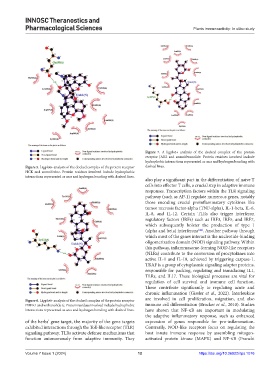
                                                               Figure  7. A ligplot+ analysis of the docked complex of the protein
                                                               receptor JAK2 and somniferanolide. Protein residues involved include
                                                               hydrophobic interactions represented as arcs and hydrogen bonding with
            Figure 5. Ligplot+ analysis of the docked complex of the protein receptor   dashed lines.
            HCK and somniferine. Protein residues involved include hydrophobic
            interactions represented as arcs and hydrogen bonding with dashed lines.
                                                               also play a significant part in the differentiation of naive T
                                                               cells into effector T cells, a crucial step in adaptive immune
                                                               responses. Transcription factors within the TLR signaling
                                                               pathway (such as AP-1) regulate numerous genes, notably
                                                               those encoding crucial proinflammatory cytokines like
                                                               tumor necrosis factor-alpha (TNF-alpha), IL-1-beta, IL-6,
                                                               IL-8, and IL-12. Certain TLRs also trigger  interferon
                                                               regulatory factors (IRFs) such as IRF3, IRF5, and IRF7,
                                                               which  subsequently  bolster  the  production  of  type  1
                                                                                     [44]
                                                               (alpha and beta) interferons . Another pathway through
                                                               which most of the genes interact is the nucleotide-binding
                                                               oligomerization domain (NOD) signaling pathway. Within
                                                               this pathway, inflammasome-forming NOD-like receptors
                                                               (NLRs) contribute to the conversion of procytokines into
                                                               active IL-1 and IL-18, achieved by triggering caspase-1.
                                                               TRAF is a group of cytoplasmic signaling adaptor proteins,
                                                               responsible for packing, regulating and transducing IL1,
                                                               TLRs, and IL17. These biological processes are vital for
                                                               regulation of cell survival and immune cell function.
                                                               These contribute significantly to regulating acute and
                                                               chronic inflammation (Gissler  et  al., 2022). Interleukins
            Figure 6. Ligplot+ analysis of the docked complex of the protein receptor   are involved in cell proliferation, migration, and also
            PDPK1 and withanolide G. Protein residues involved include hydrophobic   immune cell differentiation (Brocker et al., 2010). Studies
            interactions represented as arcs and hydrogen bonding with dashed lines.   have shown that NF-κB are important in modulating
                                                               the adaptive inflammatory response, such as enhanced
            of the herbs’ gene target, the majority of the gene targets   expression of genes responsible for pro-inflammation.
            exhibited interactions through the Toll-like receptor (TLR)   Contrarily, NOD-like receptors focus on regulating the
            signaling pathway. TLRs activate defense mechanisms that   host innate immune response by assembling mitogen-
            function  autonomously  from  adaptive  immunity.  They   activated protein kinase (MAPK) and NF-κB (Franchi


            Volume 7 Issue 1 (2024)                         12                        https://doi.org/10.36922/itps.1076

