


Page 99 - ITPS-7-1
P. 99
INNOSC Theranostics and
            Pharmacological Sciences                                               Plants immunoactivity: In silico study


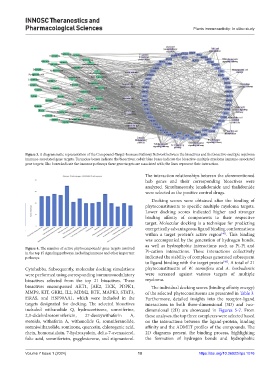
            Figure 3. A diagrammatic representation of the Compound-Target-Immune Pathway Network between the bioactives and the bioactive-multiple myeloma
            immune-associated gene targets. Turquoise boxes indicate the bioactives; cobalt blue boxes indicate the bioactive-multiple myeloma immune-associated
            gene targets; lilac boxes indicate the immune pathways these gene targets are associated with; the lines represent their interaction.

                                                               The interaction relationships between the aforementioned
                                                               hub genes and their corresponding bioactives were
                                                               analyzed. Simultaneously, lenalidomide and thalidomide
                                                               were selected as the positive control drugs.
                                                                 Docking scores were obtained after the binding of
                                                               phytoconstituents  to  specific  multiple  myeloma  targets.
                                                               Lower docking scores indicated higher and stronger
                                                               binding affinity  of components  to their  respective
                                                               target. Molecular docking is a technique for predicting
                                                               energetically advantageous ligand binding conformations
                                                               within a target protein’s active region . This binding
                                                                                               [40]
                                                               was accompanied by the generation of hydrogen bonds,
                                                               as well as hydrophobic interactions such as Pi-Pi and
            Figure 4. The number of active phytocompounds’ gene targets involved
            in the top 15 signaling pathways, including immune and other important   Pi-cation interactions.  These interactions collectively
            pathways.                                          indicated the stability of complexes generated subsequent
                                                               to ligand binding with the target protein . A total of 21
                                                                                                [40]
            Cytohubba. Subsequently, molecular docking simulations   phytoconstituents  of  W. somnifera  and  A. barbadensis
            were performed using corresponding immunomodulatory   were screened against various targets of multiple
            bioactives selected from the top 21 bioactives. These   myeloma.
            bioactives  encompassed  AKT1,  JAK2,  HCK,  PDPK1,   The individual docking scores (binding affinity energy)
            MMP9, KIT, GRB2, IL2, MDM2, BTK, MAPK3, STAT3,     of the selected phytoconstituents are presented in Table 3.
            HRAS, and HSP90AA1, which were included in the     Furthermore, detailed insights into the receptor-ligand
            targets  designated for docking. The  selected bioactives   interactions in both three-dimensional (3D) and two-
            included withanolide Q, hydrocortisone, somniferine,   dimensional (2D) are showcased in  Figures  5-7. From
            2,3-didehrdrosomnifericin,  27-deoxywithaferin  A,  these analyses, the top three complexes were selected based
            steroids, withaferin A, withanolide G, somniferanolide,   on the interactions between the ligand-protein, binding
            somniwithanolide, sominone, quercetin, chlorogenic acid,   affinity and the ADMET profiles of the compounds. The
            rhein, homonataloin, 7-hydroxyaloin, delta-7-avenasterol,   2D diagrams present the binding process, highlighting
            folic acid, somnifericin, gugglesterone, and stigmasterol.   the formation of hydrogen bonds and hydrophobic


            Volume 7 Issue 1 (2024)                         10                        https://doi.org/10.36922/itps.1076

