


Page 43 - JCBP-2-3
P. 43
Journal of Clinical and
            Basic Psychosomatics                                                     Emotions in anophthalmic patients


            Table 1. (Continued)
                                        Total (N=100)  PHQ‑9 score (mean±SD)  P    GAD‑7 score (mean±SD)  P
            Satisfaction of wearing prosthetic eyes                        <0.001                        <0.001
             Uncomfortable                11 (11%)         8.455±1.214                  8.273±1.737
             General comfortable          63 (63%)         5.079±1.371                  5.286±1.570
             Very comfortable             26 (26%)         3.000±0.894                  2.885±1.211
            Abbreviations: PHQ-9: Patient Health Questionnaire-9; GAD-7: Generalized Anxiety Disorder-7.


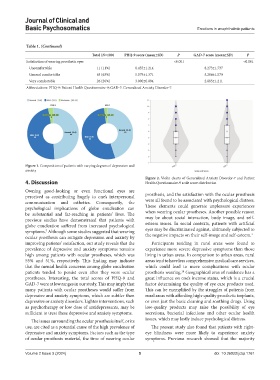
            Figure 1. Composition of patients with varying degrees of depression and
            anxiety
                                                               Figure 2. Violin charts of Generalized Anxiety Disorder-7 and Patient
            4. Discussion                                      Health Questionnaire-9 scale score distribution
            Owning  good-looking or even  functional eyes  are
            perceived as contributing hugely to one’s interpersonal   prosthesis, and the satisfaction with the ocular prosthesis
            communication and esthetics. Consequently, the     were all found to be associated with psychological distress.
            psychological  implications  of  globe  enucleation  can   These  elements  could  generate  unpleasant  experiences
            be  substantial  and  far-reaching  in  patients’  lives.  The   when wearing ocular prostheses. Another possible reason
            previous studies have demonstrated that patients with   may  be about social  interaction, body image,  and  self-
            globe enucleation suffered from increased psychological   esteem issues. In social contexts, patients with artificial
                    7
            symptoms.  Although some studies suggested that wearing   eyes may be discriminated against, ultimately subjected to
                                                                                                            1
            ocular prosthesis can mitigate depression and anxiety by   the negative impacts on their self-image and self-esteem.
            improving patients’ satisfaction, our study reveals that the   Participants residing in rural areas were found to
            prevalence of depressive and anxiety symptoms remains   experience more severe depressive symptoms than those
            high among patients with ocular prostheses, which was   living in urban areas. In comparison to urban areas, rural
            55% and 51%, respectively. This finding may indicate   areas tend to have less comprehensive medical care services,
            that the mental health concerns among globe enucleation   which could lead to more complications with ocular
            patients tended to persist even after they wore ocular   prosthesis wearing.  Geographical area of residence has a
                                                                              18
            prostheses.  Interesting,  the  total  scores  of  PHQ-9  and   great influence on one’s income status, which is a crucial
            GAD-7 were at low ranges in our study. This may imply that   factor determining the quality of eye care products used.
            many patients with ocular prostheses would suffer from   This can be exemplified by the struggles of patients from
            depressive and anxiety symptoms, which are subtler than   rural areas with affording high-quality prosthetic implants,
            depressive or anxiety disorders. Lighter interventions, such   or even just the basic cleaning and soothing drugs. Using
            as psychotherapy or low dose of antidepressants, may be   low-quality products may raise the possibility of eye
            sufficient to treat these depressive and anxiety symptoms.  secretions, bacterial infections and other ocular health
              The issues surrounding the ocular prosthesis itself, or its   issues, which may lastly induce psychological distress.
            use, are cited as a potential cause of the high prevalence of   The present study also found that patients with right-
            depressive and anxiety symptoms. Factors such as the type   eye blindness were more likely to experience anxiety
            of ocular prosthesis material, the time of wearing ocular   symptoms. Previous research showed that the majority


            Volume 2 Issue 3 (2024)                         5                               doi: 10.36922/jcbp.1761

