


Page 62 - JCTR-11-4
P. 62
Journal of Clinical and
            Translational Research                                             AR-TAVR coaxiality assessment using 3DP


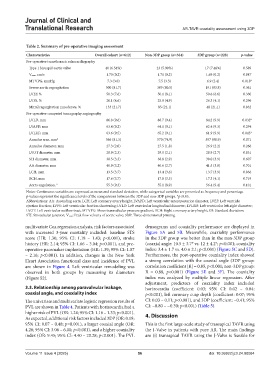
            Table 2. Summary of pre‑operative imaging assessment
            Characteristics              Overall cohort (n=612)  Non‑3DP group (n=384)  3DP group (n=228)  p‑value
            Pre-operative transthoracic echocardiography
             Type 1 bicuspid aortic valve     40 (6.54%)            23 (5.99%)          17 (7.46%)      0.589
             Vmax, cm/s                       1.70 (0.2)            1.71 (0.2)           1.69 (0.2)     0.847
             MTVPG, mmHg                       7.3 (3.0)            7.5 (3.3)            6.9 (2.4)      0.018*
             Severe aortic regurgitation      500 (81.7)            309 (80.5)          191 (83.8)      0.361
             LVEF, %                          50.3 (7.6)            50.1 (8.1)           50.6 (6.6)     0.330
             LVFS, %                          26.1 (4.6)            25.9 (4.9)           26.3 (4.1)     0.296
             Mitral regurgitation ≥moderate, %  133 (21.7)          85 (22.1)            48 (21.1)      0.832
            Pre-operative computed tomography angiography
             LVLD, mm                         86.8 (9.6)            88.7 (9.4)           84.2 (9.9)     0.032*
             LVAPD, mm                        63.4 (9.2)            64.1 (9.1)           62.4 (9.3)     0.294
             LVLRD, mm                        63.6 (9.5)            65.2 (9.1)           61.9 (9.9)     0.043*
             Annulus area, mm 2               566 (81.3)            570 (74.9)          557 (88.9)      0.071
             Annulus diameter, mm             27.3 (2.0)            27.5 (1.8)           26.9 (2.2)     0.266
             LVOT diameter, mm                28.9 (2.3)            29.0 (2.1)           28.9 (2.7)     0.831
             STJ diameter, mm                 38.5 (3.3)            38.8 (2.9)           38.0 (3.9)     0.607
             AA diameter, mm                  40.9 (3.2)            40.6 (2.7)           41.5 (3.8)     0.701
             LCH, mm                          13.5 (3.7)            13.4 (3.6)           13.7 (3.9)     0.836
             RCH, mm                          17.6 (3.7)            17.8 (3.5)           17.3 (4.1)     0.719
             Aorta angulation, °              55.3 (9.3)            55.1 (8.9)           56.4 (9.4)     0.101
            Notes: Continuous variables are expressed as mean and standard deviation, while categorical variables are presented as frequency and percentage.
            p-values represent the significance levels of the comparisons between the 3DP and non-3DP groups. *p<0.05.
            Abbreviations: AA: Ascending aorta; LCH: Left coronary artery height; LVAPD: Left ventricular anteroposterior diameter; LVEF: Left ventricle
            ejection fraction; LVFS: Left ventricular fraction shortening; LVLD: Left ventricular longitudinal diameter; LVLRD: Left ventricular left-right diameter;
            LVOT: Left ventricular outflow tract; MTVPG: Mean transvalvular pressure gradient; RCH: Right coronary artery height; SD: Standard deviation;
            STJ: Sinotubular junction; Vmax: Peak flow velocity of aortic valve; 3DP: Three-dimensional printing.

            multivariate Cox regression analysis, risk factors associated   densograms and coaxiality performance are displayed in
            with  increased  3-year mortality  included:  baseline  STS   Figure  5A and  5B.  Meanwhile, coaxiality performance
            score  (HR:  1.30;  95%  CI:  1.18  –  1.43;  p<0.001),  stroke   in the 3DP group was better than in the non-3DP group
            history (HR: 2.14; 95% CI: 1.66 – 3.04; p<0.001), and pre-  (coaxial angle: 10.5 ± 3.7° vs. 12 ± 4.2°; p<0.001; coaxiality
            operative pacemaker implantation (HR: 1.39; 95% CI: 1.07   index: 3.4 ± 1.7 vs. 4.0 ± 2.1; p<0.001) (Figure 5C and 5D).
            – 2.16;  p<0.001). In addition, changes in the New  York   Furthermore, the post-operative coaxiality index showed
            Heart Association functional class and incidence of PVL   a strong correlation with the coaxial angle (3DP group:
            are shown in  Figure  4. Left ventricular remodeling was   correlation coefficient [R] = 0.85, p<0.001; non-3DP group:
            observed  in  both  groups  by  measuring  its  diameters   R  = 0.88,  p<0.001) (Figure  5E and  5F). The coaxiality
            (Figure S2).                                       index  was  analyzed  by  multiple  linear  regression.  After
                                                               adjustment,  predictors  of  coaxiality  index  included
            3.3. Relationship among paravalvular leakage,      horizocardia (coefficient: 0.03; 95% CI: 0.02 – 0.04;
            coaxial angle, and coaxiality index                p<0.001), left coronary cusp depth (coefficient: 0.07; 95%
            The univariate and multivariate logistic regression results of   CI: 0.03 – 0.11; p<0.001), and 3DP (coefficient: −0.41; 95%
            PVL are shown in Table 4. Patients with horizocardia had a   CI: −0.80 – −0.30; p<0.001) (Table 5).
            higher risk of PVL (OR: 1.24; 95% CI: 1.16 – 1.33; p<0.001).   4. Discussion
            As expected, additional risk factors included 3DP (OR: 0.18;
            95% CI: 0.07 – 0.48; p=0.001), a larger coaxial angle (OR:   This is the first large-scale study of transapical TAVR using
            4.28; 95% CI: 3.06 – 6.00; p<0.001), and a higher coaxiality   the J-Valve in patients with pure AR. The main findings
            index (OR: 9.45; 95% CI: 4.40 – 20.28; p<0.001). The PVL   are (i) transapical TAVR using the J-Valve is feasible for


            Volume 11 Issue 4 (2025)                        56                            doi: 10.36922/jctr.24.00084

