


Page 60 - JCTR-11-4
P. 60
Journal of Clinical and
            Translational Research                                             AR-TAVR coaxiality assessment using 3DP


                         A


                         B


                         C


                         D


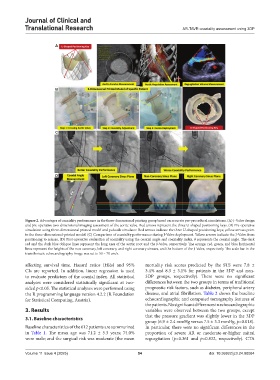
            Figure 2. Advantages of coaxiality performance in the three-dimensional printing group based on accurate pre-procedural simulations. (A) J-Valve design
            and pre-operative two-dimensional imaging assessment of the aortic valve. Red arrows represent the three U-shaped positioning keys. (B) Pre-operative
            simulation using three-dimensional printed model and pulsatile simulator. Red arrows indicate the three U-shaped positioning keys; yellow arrows point
            to the three-dimensional-printed model. (C) Comparison of coaxiality performance during J-Valve deployment. Yellow arrows indicate the J-Valve from
            positioning to release. (D) Post-operative evaluation of coaxiality using the coaxial angle and coaxiality index. θ represents the coaxial angle. The dark
            red and the dark blue oblique lines represent the long axes of the aortic root and the J-Valve, respectively. The orange, red, green, and blue horizontal
            lines represent the heights of the non-coronary, left coronary, and right coronary sinuses, and the bottom of the J-Valve, respectively. The scale bar in the
            transthoracic echocardiography image was set to 50 – 70 cm/s.

            affecting survival time. Hazard ratios (HRs) and 95%   mortality risk scores predicted by the STS were 7.8 ±
            CIs are reported. In addition, linear regression is used   3.4%  and  8.3  ±  3.1%  for  patients  in  the  3DP  and  non-
            to evaluate predictors of the coaxial index. All statistical   3DP groups, respectively). There were no significant
            analyses  were considered statistically  significant  at two-  differences between the two groups in terms of traditional
            sided p<0.05. The statistical analyses were performed using   prognostic risk factors, such as diabetes, peripheral artery
            the R programming language version 4.2.2 (R Foundation   disease, and atrial fibrillation. Table 2 shows the baseline
            for Statistical Computing, Austria).               echocardiographic and computed tomography features of
                                                               the patients. No significant differences in echocardiographic
            3. Results                                         variables were observed between the two groups, except
                                                               that the pressure gradient was slightly lower in the 3DP
            3.1. Baseline characteristics
                                                               group (6.9 ± 2.4 mmHg versus 7.5 ± 3.3 mmHg, p=0.018).
            Baseline characteristics of the 612 patients are summarized   In particular, there were no significant differences in the
            in  Table 1. The mean age was 71.2 ± 5.3  years; 74.0%   proportion of  severe AR  or  moderate-or-higher  mitral
            were male; and the surgical risk was moderate (the mean   regurgitation (p=0.361 and  p=0.832, respectively). CTA


            Volume 11 Issue 4 (2025)                        54                            doi: 10.36922/jctr.24.00084

