


Page 55 - MI-2-1
P. 55
Microbes & Immunity                                       ABO blood type and cancer risk: A complex relationship


                                                               included combinations of keywords such as “ABO blood
                                                               group,” “cancer risk,” “oncology,” and specific cancer types
                                                               (e.g., breast, colorectal, lung, and prostate cancer).

                                                                 Studies that provided original data or meta-analyses
                                                               linking ABO blood group phenotypes with cancer
                                                               incidence or susceptibility were included, particularly those
                                                               presenting significant findings, large sample sizes, or critical
                                                               insights into the potential mechanisms underlying this
                                                               association. Studies unrelated to cancer or those that lacked
                                                               clear ABO blood group data were excluded. Each article
                                                               was  reviewed  for quality, relevance, and  methodological
                                                               rigor. Special attention was given to studies that controlled
                                                               for confounding variables such as age, sex, lifestyle factors,
                                                               and comorbidities. The results of the selected studies were
                                                               analyzed thoroughly to assess the strength of the evidence
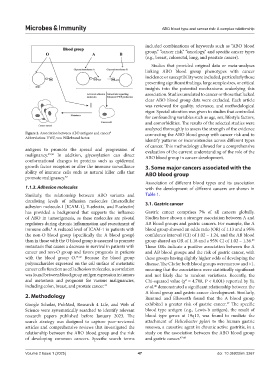
            Figure 2. Association between ABO antigens and cancer   8  connecting the ABO blood group with cancer risk and to
            Abbreviation: VWF, von Willebrand factor.
                                                               identify patterns or inconsistencies across different types
                                                               of cancer. This methodology allowed for a comprehensive
            antigens to promote the spread and progression of   evaluation of the current understanding of the role of the
            malignancy. 35,36  In addition, glycosylation can direct   ABO blood group in cancer development.
            conformational changes in proteins such as epidermal
            growth factor receptors or alter the immune surveillance   3. Some major cancers associated with the
            ability  of immune cells such as natural killer cells that   ABO blood group
            promote malignancy. 37
                                                               Association of different blood types and its association
            1.1.3. Adhesion molecules                          with the development of different cancers are shown in
            Similarly, the relationship between ABO variants and   Table 1.
            circulating  levels  of  adhesion  molecules  (intercellular
            adhesion molecule-1 [ICAM-1], E-selectin, and P-selectin)   3.1. Gastric cancer
            has provided a background that supports the influence   Gastric cancer comprises 7% of all cancers globally.
            of ABO in tumorigenesis, as these molecules are pivotal   Studies have shown a stronger association between A and
            regulators during chronic inflammation and recruitment of   AB blood groups and gastric cancers. For example, the A
            immune cells.  A reduced level of ICAM-1 in patients with   blood group showed an odds ratio (OR) of 1.13 and a 95%
                       8
            the non-O blood group (specifically the A blood group)   confidence interval (CI) of 1.02 – 1.24, and the AB blood
            than in those with the O blood group is assumed to promote   group shared an OR of 1.18 and a 95% CI of 1.02 – 1.36.
                                                                                                            45
            metastasis that causes a decrease in survival in patients with   These ORs indicate a positive association between the A
            cancer and non-O group and favors prognosis in patients   and AB blood groups and the risk of gastric cancer, with
            with the blood group  O. 38-43  Because the blood group   these groups having slightly higher odds of developing the
            polysaccharides expressed on the cell surface of metastatic   disease. The CIs for both blood groups were narrow and >1,
            cancer cells function as cell adhesion molecules, a correlation   meaning that the associations were statistically significant
            was found between blood group antigen expression in tumors   and not likely due to random variations. Recently, the
            and metastasis and prognosis for various malignancies,   Chi-squared value (χ  = 4.708, P < 0.001) reported by Yu
                                                                                2
            including colon, breast, and prostate cancer. 44   et al.  demonstrated a significant relationship between the
                                                                   46
                                                               A blood group and gastric cancer development. Similarly,
            2. Methodology                                     Rummel and Ellsworth found that the A blood group
                                                                                                 17
            Google Scholar, PubMed, Research 4 Life, and Web of   exhibited a greater risk of gastric cancer.  The specific
            Science were systematically searched to identify relevant   blood type antigen (e.g., Lewis-b antigen), the result of
            research papers published before January 2023. The   blood  type  genes  at  19q13,  was  found  to  mediate  the
            search strategy was designed to capture peer-reviewed   attachment of  Helicobacter  pylori to the human gastric
            articles and comprehensive reviews that investigated the   mucosa, a causative agent in chronic active gastritis, in a
            relationship between the ABO blood group and the risk   study on the association between the ABO blood group
            of developing common cancers. Specific search terms   and gastric cancer. 47,48


            Volume 2 Issue 1 (2025)                         47                               doi: 10.36922/mi.3267

