


Page 24 - MSAM-1-1
P. 24
Materials Science in Additive Manufacturing                Spheroidization of 304L SS powder for LPBF process


            by the FEI Helios NanoLab 600 (Thermo Fisher Scientific,   The tensile properties of parts fabricated with as-received
            USA);  samples  of  as-received  and  spheroidized  powders   and spheroidized powders were measured using an Instron
            were  set in  conductive  bakelite, mechanically polished   5969 Dual Column Universal Testing System (Instron,
            down to 0.05 µm, and vibratorily polished in 0.02 µm   USA) with 50 kN force capacity at a strain rate 0.015/min.
            colloidal silica for 4 h. The phase identification of powder   To evaluate the repeatability of tensile properties per each
            was performed using X-ray diffraction (XRD).       fabricated part, 5 mini-tensile specimens (with thickness
              The dynamic powder flow properties were measured   1 ± 0.02 mm and dimensions shown in  Figure 4) were
            and analyzed using a Revolution Powder Analyzer    cut from each cube and tested using a universal Instron
            (Mercury Scientific Inc., USA). As demonstrated in   machine at room temperature with a crosshead speed
                                                                         [36]
            Figure 3, this analyzer rotates a drum composed of a   of 0.015/min . The analysis of variance (ANOVA) was
            powder sample. The drum has glasses on both sides,   conducted on the obtained results of tensile tests.
            which let the coaxial camera take images of the powder   3. Results and discussion
            movement to quantify flowability when the powder is
            illuminated with a backlight on the opposite side. While   3.1. Powder morphology
            rotating, the powder will occasionally avalanche as it   The SEM  micrographs provided in  Figure 5 indicate
            succumbs to the force of gravity, where it eventually comes   the morphological differences between as-received
            to rest. At the onset of slumping, the angle is known as the   and plasma spheroidized powders, where particles
            avalanche angle and is calculated at the cycle’s peak. The   with irregular geometries in the as-received powder
            break energy can be used to evaluate the amount of energy
            needed to begin each avalanche and is the subtraction of
            the maximum powder’s energy level before an avalanche
            begins from the starting powder’s energy level before
            starting the rotation process. A standard rotational
            speed recommended by the equipment’s manufacturer is
            0.3 rpm, which was used to observe powder flow for the
            as-received and spheroidized 304L powders.


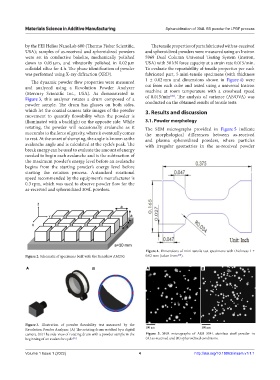
                                                               Figure 4. Dimensions of mini-tensile test specimens with thickness 1 ±
            Figure 2. Schematic of specimens built with the Renishaw AM250.  0.02 mm (taken from ).
                                                                             [37]
            A                           B                      A                       B


            Figure 3. Illustration of powder flowability test measured by the
            Revolution Powder Analyzer. (A) The rotating drum watched by a digital
            camera. (B) The side-view of rotating drum with a powder sample in the   Figure 5. SEM micrographs of AISI 304L stainless steel powder in
            beginning of an avalanche cycle .                  (A) as-received and (B) spheroidized conditions.
                                [35]

            Volume 1 Issue 1 (2022)                         4                       http://doi.org/10.18063/msam.v1i1.1

